Guides

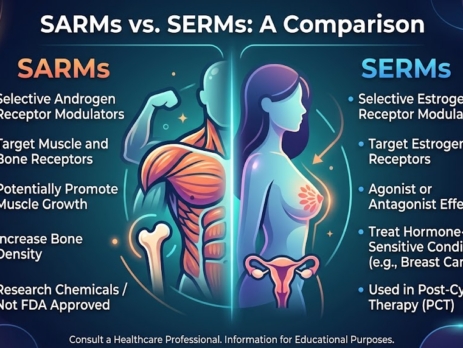
SARMs vs. SERMs — A Comprehensive Guide for the Research Community

In the evolving landscape of performance and research compounds, two categories frequently generate confusion due to their similar acronyms—Selective Androgen Receptor Modulators (SARMs) and Selective Estrogen Receptor Modulators (SERMs). While both are “selective modulators,” they act on entirely different biological pathways and serve distinct purposes in research settings. For researchers and informed audiences exploring advanced compounds via platforms like MuscleChem, understanding the difference between SARMs and SERMs is essential for interpreting results, designing protocols, and managing outcomes responsibly. This article...

From Lab to Lifestyle — The Rise of Peptide

Built on Research. Designed for Performance.  Peptides have been studied in scientific and medical fields for decades. Today, they are gaining attention beyond the laboratory for their role in supporting skin health, recovery, and overall wellness. This shift—from controlled research environments to everyday lifestyle use—reflects a broader trend: people are no longer looking for quick fixes. They want solutions that work with the body, not against it. At MuscleChem, that principle defines everything we do. What Are Peptides?  Peptides are short...

CJC-1295 (No DAC) 10mg — Complete In-Depth Guide, Benefits, Mechanism

CJC-1295 (No DAC) often referred to as Modified GRF (1-29), is a synthetic peptide engineered to stimulate the natural release of growth hormone (GH) in the human body. Unlike direct hormone replacement therapies, this peptide works by enhancing the body's own biological processes, making it a popular option in performance optimization and anti-aging protocols. The “No DAC” version specifically refers to the absence of Drug Affinity Complex (DAC), which significantly shortens its half-life. This shorter duration allows the peptide to...

RAD-140 Tablets vs Capsules — Which Delivery Format Is Right for You?

Selective Androgen Receptor Modulators (SARMs) continue to shape the landscape of performance and muscle-related research, with RAD-140 (Testolone) recognized as one of the most potent and selective compounds in its class. Its high affinity for androgen receptors and tissu e-selective activity has made it a subject of increasing scientific interest in areas such as lean muscle preservation and bone density research. As demand grows, RAD-140 is now widely available in multiple oral delivery formats—most notably tablets...

IGF-1 (1mg) — Side Effects, Risks & Negative Factors

IGF-1 (Insulin-like Growth Factor-1) is a powerful peptide hormone that plays a central role in cell growth, muscle development, and tissue repair. While medically used in specific deficiency conditions, synthetic IGF-1 products (such as 1mg vials marketed for performance enhancement) carry significant health risks, especially when used without medical supervision. Although often promoted in bodybuilding and anti-aging communities, the unregulated use of IGF-1 can disrupt critical hormonal and metabolic pathways, leading to both short-term and...

CJC-1295 with DAC Risks Explained — Side Effects & Safety Guide

CJC-1295 with DAC (Drug Affinity Complex) is a synthetic peptide designed to stimulate the release of growth hormone (GH) by mimicking natural growth hormone-releasing hormone (GHRH). While it is often marketed for anti-aging, muscle growth, fat loss, and recovery, its use comes with a range of potential risks and downsides—especially when used without medical supervision. Despite its growing popularity in fitness and biohacking communities, it is important to understand that CJC-1295 with DAC is not...

CJC-1295 with DAC – Powerful Benefits for GH Optimization, Muscle Growth, Fat Loss & Recovery

CJC-1295 (with DAC) – 5mg is a highly advanced synthetic peptide engineered to stimulate the body’s natural production of growth hormone (GH). As a modified version of growth hormone-releasing hormone (GHRH), it enhances the pituitary gland’s ability to release GH in a sustained and physiologically balanced manner. What sets this compound apart is the addition of Drug Affinity Complex (DAC) technology. This modification allows the peptide to bind to circulating albumin in the bloodstream, dramatically extending its...

MK-777 (Acetamoren) — Advanced Guide to Benefits, Mechanism, Research, and Performance Potential 

MK-777 (Acetamoren) is a next-generation compound currently being explored within the field of endocrine modulation and growth hormone optimization. Classified as a growth hormone secretagogue (GHS), MK-777 is designed to stimulate the body’s natural production of growth hormone (GH) and insulin-like growth factor-1 (IGF-1) through interaction with the ghrelin receptor pathway. As interest in non-invasive hormonal optimization continues to grow, compounds like MK-777 are gaining attention for their ability to promote anabolic activity, recovery, metabolic efficiency,...

MK-777 (Acetamoren) — Detailed Analysis of Side Effects, Risks, and Disadvantages

MK-777 (Acetamoren) is an emerging growth hormone secretagogue (GHS) designed to stimulate endogenous growth hormone (GH) and insulin-like growth factor-1 (IGF-1) production through activation of the ghrelin receptor (GHS-R1a). While it is often promoted for its potential benefits in muscle growth, recovery, and metabolic enhancement, it is critical to evaluate the potential risks, physiological drawbacks, and unknown safety profile associated with its use. Unlike approved pharmaceutical compounds, MK-777 remains a research-only substance, with no established clinical safety data in humans....

Anti-Aging Science — Do Peptides Really Slow Down Aging?

The science of anti-aging has evolved significantly, moving beyond surface-level treatments toward advanced biological interventions. Among these innovations, Peptides have emerged as a focal point in both clinical research and performance-focused communities. Widely regarded for their targeted physiological effects, peptides are increasingly utilized to support skin health, recovery, and overall cellular function. As interest grows, so does the question: do Peptides genuinely slow down the aging process, or are their benefits overstated? This article...