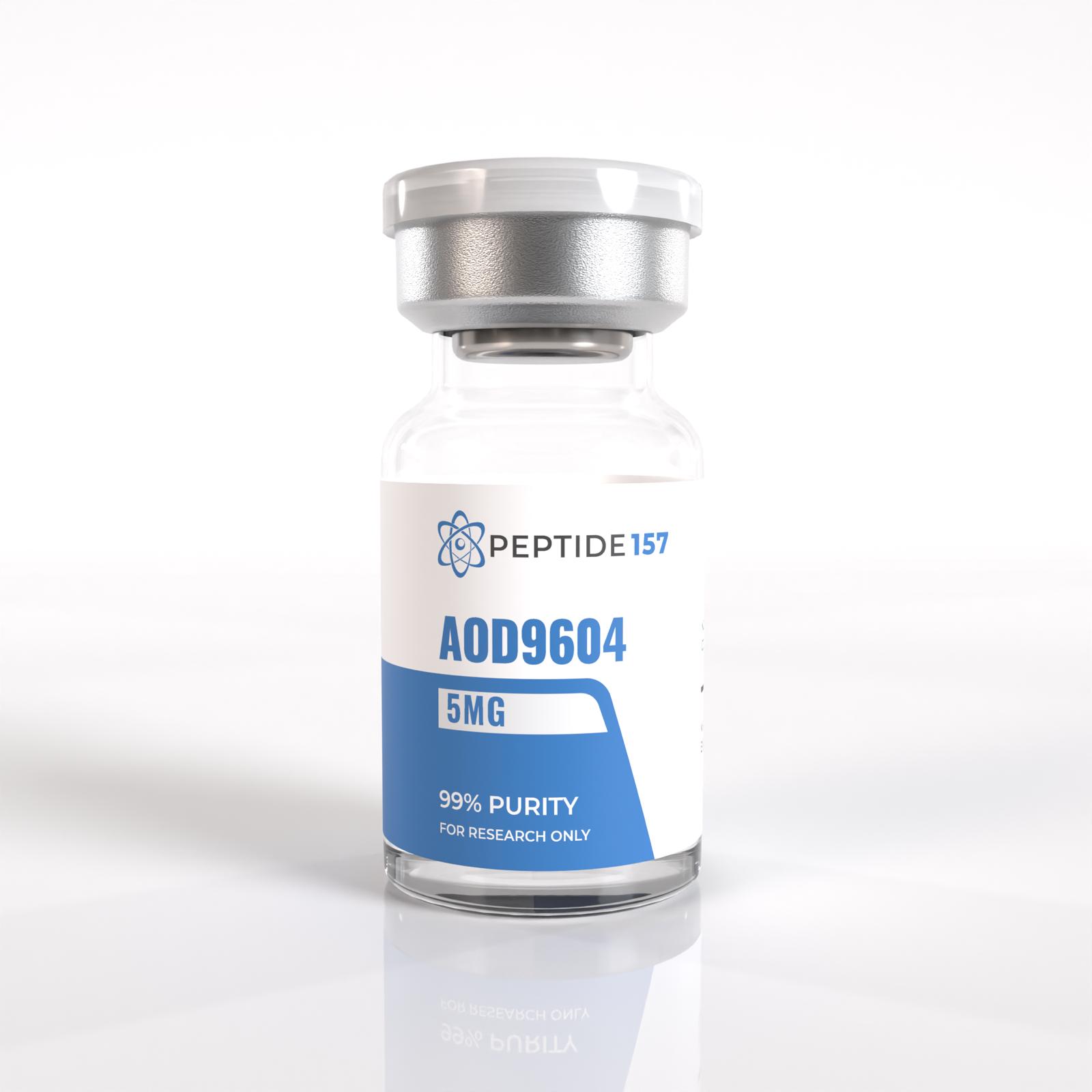
AOD-9604 – 5mg: A Comprehensive Analysis of Safety Profile, Potential Adverse Reactions, and Tolerability Considerations
AOD-9604 (Anti-Obesity Drug-9604) is a synthetically manufactured peptide derivative, representing a 15-amino acid sequence (Tyr-His-Leu-Pro-Val-Pro-Glu-Pro-Ala-Ala-Gly-Ala-Leu-Ile) identical to the C-terminal fragment (amino acids 177–191) of the human growth hormone (hGH). Its development stemmed from the pursuit of dissociating the lipolytic and fat-oxidizing properties of hGH from its proliferative and insulin-like growth factor-1 (IGF-1) elevating effects. As a result, AOD-9604 is pharmacologically designed to selectively modulate pathways involved in adipocyte metabolism—specifically stimulating β-adrenergic receptor-mediated lipolysis and inhibiting the carboxylase activity involved in de novo lipogenesis—while exhibiting negligible binding to the somatogenic growth hormone receptor, thereby mitigating classic systemic hGH effects. Its primary investigational applications center on metabolic syndrome, obesity management, and localized adipose reduction. This document provides an exhaustive review of the safety profile, potential side effects, and tolerability of AOD-9604 at a standardized 5 mg dosage, synthesizing data from preclinical studies, limited clinical trials, and observational research reports.
Mechanistic Basis for Safety and Side Effect Profile
Understanding the side effect spectrum of AOD-9604 requires an appreciation of its targeted mechanism. Unlike full-length hGH or secretagogues (e.g., GHRP-6), AOD-9604 does not significantly elevate systemic IGF-1 levels, which is a primary driver of many hGH-related adverse effects such as acromegalic changes, organomegaly, and profound insulin resistance. Its action is primarily metabolic, acting on adipose tissue via a proposed unique receptor interaction. Consequently, its adverse effect profile is generally milder, more transient, and localized compared to traditional growth hormone therapies. However, as a bioactive peptide, it can induce unintended responses related to its metabolic modulation, individual immunological sensitivity, and route of administration.
Detailed Enumeration of Potential Side Effects
The following sections delineate potential adverse reactions associated with subcutaneous administration of AOD-9604 (5mg), categorized by frequency and physiological system.
1. Injection Site Reactions (Most Common)
Description:
Localized, mild-to-moderate inflammatory responses at the subcutaneous administration site.
Manifestations:
Erythema (redness), induration (swelling), pruritus (itching), tenderness, minor hematoma (bruising), and transient pain. Formation of small, subcutaneous nodules is possible with chronic, rotation-poor administration.
Pathophysiology:
Related to the physical trauma of injection, pH or osmolarity of the reconstituted solution, or a mild localized immune response to the peptide.
Management & Prognosis:
Typically self-resolving within 24-72 hours. Mitigation strategies include employing aseptic technique, ensuring proper reconstitution with bacteriostatic water, rotating injection sites (abdomen, thighs), and allowing the solution to reach ambient temperature before injection.
2. Headache (Common)
Description:
Mild to moderate, tension-type headaches reported frequently during the initial adaptation phase (first 1-2 weeks).
Pathophysiology:
The exact etiology is unclear but may be multifactorial: subtle neuroendocrine feedback alterations, transient changes in cerebral vascular tone, electrolyte shifts from metabolic activity, or dehydration. It is not typically associated with increased intracranial pressure, as seen with full hGH.
Management:
Usually transient. Adequate hydration and electrolyte balance are recommended. Persistent or severe headaches warrant discontinuation and evaluation.
3. Gastrointestinal Discomfort (Less Common)
Description:
Nonspecific, transient disturbances in gastrointestinal function.
Manifestations:
Mild nausea, epigastric discomfort, abdominal bloating, gas, or altered bowel habits (constipation or diarrhea).
Pathophysiology:
May be related to indirect effects of increased lipolysis and free fatty acid flux, mild autonomic nervous system modulation, or individual sensitivity to metabolic shifts.
Management:
Symptoms often subside with continued use as the body adapts. Taking the peptide with or without food (based on individual response) may provide relief.
4. Fatigue and Lethargy (Occasional)
Description:
A paradoxical feeling of tiredness or reduced energy, often during the initial treatment period.
Pathophysiology:
Hypothesized to result from the body’s energy reallocation towards increased lipid mobilization and oxidation. It may represent a short-term adjustment period as metabolic pathways shift from primarily carbohydrate to increased fat utilization.
Management:
Typically resolves within days to a week. Ensuring adequate caloric intake and sleep is advised.
5. Dizziness or Lightheadedness (Occasional)
Description:
Episodic, mild sensations of vertigo or presyncope.
Pathophysiology:
Potential causes include mild orthostatic hypotension from fluid shifts, transient hypoglycemia in sensitive individuals despite the peptide’s design, or autonomic response.
Management:
Arising slowly from seated/lying positions, maintaining hydration, and monitoring blood glucose if predisposed. Persistent symptoms necessitate medical evaluation.
6. Appetite Modulation (Variable)
Description:
A bidirectional effect on hunger and satiety signals.
Manifestations:
Some report significant appetite suppression, potentially linked to increased β-oxidation and ketone production. Others report increased hunger, possibly due to perceived energy deficit from heightened metabolism.
Pathophysiology:
Likely involves complex interplay with hormones like leptin, ghrelin, and peptide YY, influenced by the peptide’s metabolic actions.
Management:
Monitoring dietary intake and maintaining nutritional balance is crucial.
7. Musculoskeletal Discomfort (Infrequent)
Description:
Mild, diffuse joint stiffness or muscle soreness.
Pathophysiology:
Distinct from hGH-induced arthralgia. May be related to subtle connective tissue fluid flux, electrolyte changes, or increased physical activity secondary to weight loss rather than a direct anabolic or proliferative effect.
Management:
Usually mild and self-limiting. Proper hydration and electrolyte maintenance are beneficial.
8. Sleep Architecture Alterations (Infrequent)
Description:
Changes in sleep onset, maintenance, or dream vividness.
Pathophysiology:
Metabolic peptides can influence neurotransmitters (e.g., serotonin, dopamine) and neuropeptides involved in sleep/wake cycles. Altered energy metabolism may also indirectly affect sleep patterns.
Management:
Often normalizes with continued use. Administering the dose earlier in the day (rather than pre-bed) may mitigate this effect.
9. Blood Glucose Fluctuations (Rare, but Notable)
Description:
While designed to be glucose-neutral, sensitive individuals or those with pre-existing dysglycemia may experience perturbations.
Pathophysiology:
Although not directly diabetogenic, the potent lipolytic action increases free fatty acids, which can contribute to insulin resistance in susceptible individuals via the Randle cycle.
Precaution:
Individuals with diabetes, insulin resistance, or metabolic syndrome should exercise extreme caution and implement regular glucose monitoring if used in a research context.
10. Hypersensitivity and Allergic Reactions (Rare)
Description:
Local or systemic immune-mediated responses.
Manifestations:
Urticaria (hives), generalized pruritus, angioedema (swelling), bronchospasm, or anaphylaxis (extremely rare).
Pathophysiology:
IgE-mediated or non-IgE-mediated reaction to the peptide sequence or residual impurities from synthesis.
Management:
Immediate and permanent discontinuation. Administration of antihistamines or emergency medical intervention for severe reactions.
11. Mild Fluid Retention (Very Rare)
Description:
Minimal peripheral edema.
Pathophysiology:
A very weak, residual hGH-like activity on renal sodium retention, orders of magnitude less potent than full hGH.
Management:
Typically subclinical and transient. Ensuring adequate potassium intake and monitoring sodium intake can be helpful.
12. Tachyphylaxis (Tolerance Development)
Description:
A reduction in perceived or measured effects over prolonged, continuous use.
Pathophysiology:
Potential downregulation of target receptors or adaptation of downstream metabolic pathways.
Research Consideration:
In experimental settings, cycling protocols (e.g., 5 days on, 2 days off; or 4-6 week cycles with equal off-periods) are often empirically employed to potentially preserve response, though robust clinical data is lacking.
Contraindications and Special Population Considerations
Pregnancy and Lactation:
Absolute contraindication due to unknown teratogenic and lactogenic effects.
Active Malignancy:
Theoretical risk of promoting growth in hormone-sensitive tumors, though significantly lower than with hGH.
Severe Renal or Hepatic Impairment:
Altered peptide clearance may increase exposure and adverse effects.
History of Severe Allergic Reactions:
Particularly to medications or other peptides.
Conclusion and Integrative Risk Assessment
AOD-9604 at a 5 mg dosage presents a safety and tolerability profile that is generally favorable, especially when contrasted with full-length growth hormone therapy. The majority of adverse effects are mild, transient, and localized to the injection site. Systemic effects are largely related to its intended metabolic action and represent short-term adaptive responses rather than off-target toxicities. The absence of significant IGF-1 elevation is a key safety differentiator.
However, its use is not without potential risk. Individual pharmacogenomics, underlying health status, and administration technique significantly influence the risk-benefit ratio. AOD-9604 remains a research chemical, and its long-term safety profile in diverse populations is not fully characterized. Rigorous adherence to sterile technique, dose accuracy, and physiological monitoring is paramount in any investigational setting.
Begin laboratory studies using high-purity AOD-9604 (5mg) from MuscleChem, a supplier of research-grade Peptides and SARMs for controlled scientific investigation.
Disclaimer: For research use only. Not for human or animal consumption. This information is academic and not medical advice. Handle only in compliant lab settings under professional supervision.