Glutathione — An In-Depth Examination of Limitations, Drawbacks, and Unresolved Research Questions
Glutathione (GSH) is widely regarded as the body’s “master antioxidant,” and its role in redox regulation, detoxification, and cellular protection is supported by decades of biochemical literature. However, a scientifically rigorous understanding of any compound requires equal attention to its constraints, inconsistencies, and unresolved questions — not just its celebrated mechanisms.
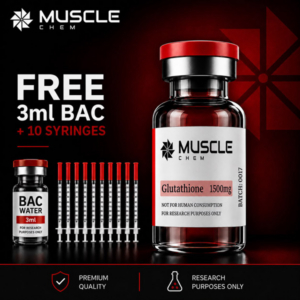
As a research compound, glutathione presents a genuinely complex set of challenges. These span its fundamental chemistry (a reactive, unstable thiol-containing molecule), its pharmacokinetics (poor and inconsistent bioavailability across delivery routes), its experimental behavior (high variability across models and tissues), and the broader evidentiary landscape (a clinical research base that remains far less developed than its preclinical counterpart). This article provides an extensive, mechanism-level examination of these limitations, intended to give researchers and laboratories working with MuscleChem’s Glutathione 1500mg a fully balanced and scientifically grounded perspective.
1) Bioavailability Challenges: A Deeper Look
Bioavailability is arguably the single most frequently discussed limitation in glutathione literature, and the issue is more layered than it first appears.
1.1) Enzymatic Degradation in the Gastrointestinal Tract
Glutathione is a tripeptide, and tripeptides are inherently vulnerable to hydrolysis by digestive enzymes. Of particular relevance is gamma-glutamyl transpeptidase (GGT), an enzyme expressed on the luminal brush-border membrane of intestinal epithelial cells. GGT cleaves the gamma-glutamyl bond that links glutamate to cysteine within the glutathione molecule, breaking it down into its constituent amino acids (or related dipeptides) before meaningful quantities can be absorbed intact.
This means that when glutathione is administered orally, a substantial fraction may never reach systemic circulation as an intact tripeptide. Instead, the body may absorb its breakdown products — glutamate, cysteine, and glycine — which must then be re-assembled into glutathione intracellularly via the glutamate-cysteine ligase and glutathione synthetase pathway, assuming sufficient cofactors and enzymatic activity are present.
1.2) Limited Intact Cellular Uptake
Even glutathione that does reach circulation intact faces a second barrier: cellular membranes are not highly permeable to intact GSH. Most cell types rely predominantly on de novo intracellular synthesis rather than direct transport of extracellular glutathione. While certain transport systems (such as specific amino acid transporters that may indirectly support glutathione precursor uptake) have been studied, the overall efficiency of raising intracellular GSH concentrations through extracellular administration remains a contested and actively researched question.
1.3) Route-Dependent Variability
Different administration routes produce dramatically different bioavailability profiles:
- Oral administration is subject to the GGT degradation problem described above, and first-pass hepatic metabolism further complicates systemic delivery.
- Intravenous administration bypasses gastrointestinal degradation but introduces its own considerations, including rapid plasma clearance and the need for precise dosing and sterile handling.
- Inhaled or nebulized forms have been studied primarily in respiratory tissue contexts, with bioavailability profiles that do not necessarily translate to systemic or other tissue-specific effects.
- Topical formulations face a distinct set of penetration barriers related to skin permeability and molecular size.
This route-dependent variability means that findings from one delivery method cannot be reliably extrapolated to another, complicating efforts to build a unified understanding of glutathione’s pharmacokinetics.
1.4) Analytical and Experimental Design Implications
Given these bioavailability complexities, researchers cannot assume that an administered dose translates directly into a proportional increase in functional, intracellular glutathione. Rigorous experimental design requires:
- Verified analytical confirmation (e.g., HPLC, LC-MS/MS) of both plasma and intracellular GSH/GSSG levels, rather than relying on administered dose as a proxy
- Careful selection of sampling time points, since glutathione kinetics can shift rapidly post-administration
- Consideration of confounding variables such as diet, baseline oxidative status, and concurrent enzymatic activity
Without these controls, conclusions about glutathione’s biological effects risk being built on unconfirmed assumptions about delivery and uptake.
2) Molecular Stability and Storage Sensitivity: Expanded Analysis
Glutathione’s antioxidant function depends on the reactivity of its free thiol (-SH) group — but this same chemical property is the root of its instability.
2.1) Oxidative Degradation
Reduced glutathione (GSH) is thermodynamically inclined to oxidize into GSSG upon exposure to oxygen, particularly in aqueous solution. This process can occur spontaneously, without any enzymatic catalyst, especially under conditions of elevated temperature, light exposure, or extended storage duration. Once oxidized, GSSG must be enzymatically reduced back to GSH (via glutathione reductase and NADPH) to regain antioxidant activity — a conversion that does not occur outside of a biological system.
2.2) Formulation-Dependent Degradation Rates
The rate of oxidative degradation can vary significantly depending on:
- pH of the solution — glutathione stability is generally pH-dependent, with certain ranges accelerating thiol oxidation
- Presence of trace metal ions — metals such as copper and iron can catalyze thiol oxidation reactions, meaning even trace contamination can meaningfully reduce shelf stability
- Powder versus solution form — lyophilized or powdered glutathione is generally more stable than reconstituted solutions, which begin degrading more rapidly once dissolved
2.3) Freeze-Thaw and Handling Vulnerabilities
Laboratory workflows frequently involve repeated freeze-thaw cycles for stored samples, and glutathione is particularly susceptible to degradation under these conditions. Each freeze-thaw cycle can introduce incremental oxidation, meaning that samples used later in a multi-cycle experiment may have meaningfully different GSH concentrations than those used during initial preparation — a subtle but important source of experimental error if not properly controlled.
2.4) Consequences for Research Reliability
Because of these stability issues, researchers must:
- Establish strict aliquoting protocols to minimize freeze-thaw exposure
- Verify concentration and purity at the time of use, not just at initial preparation
- Account for potential degradation when interpreting time-sensitive experimental data
Failure to account for these factors can introduce batch-to-batch and even sample-to-sample variability that complicates reproducibility — a foundational concern in any rigorous research program.
3) High Variability in Experimental Outcomes: A Closer Examination
Glutathione research is characterized by a notably wide spread of outcomes across different experimental contexts, driven by several compounding factors.
3.1) Tissue- and Cell-Type-Specific Differences
Glutathione metabolism is not uniform across tissue types. The liver, for instance, contains particularly high baseline glutathione concentrations and robust synthetic capacity, while other tissues — such as certain neural cell populations — may have comparatively limited synthetic reserves and different baseline GSH:GSSG ratios. As a result, findings from hepatic cell line studies often do not generalize well to neuronal, immune, or muscular tissue models, and researchers must be cautious about cross-tissue extrapolation.
3.2) Species-Specific Differences
A significant portion of foundational glutathione research has been conducted in rodent or other animal models, and in vitro cell line studies. Species differences in glutathione synthesis rates, enzyme expression (e.g., GGT activity levels), and baseline redox status mean that findings do not always translate cleanly to human physiology. This is a common limitation across many areas of biochemical research, but it is particularly relevant for glutathione given how central species-specific metabolic pathways are to its overall kinetics.
3.3) Dosing and Exposure Duration Variability
Studies examining glutathione have used a wide range of doses, exposure durations, and administration frequencies, making direct comparisons across the literature difficult. Acute, high-dose exposure models may reveal different mechanistic insights than chronic, lower-dose studies — and the two are not always interchangeable when drawing broader conclusions.
3.4) Baseline Oxidative Status as a Confounding Variable
An individual cell culture, animal model, or (in more limited human studies) research participant’s baseline oxidative stress level can significantly influence how they respond to glutathione administration. A system already operating with high baseline GSH levels may show minimal additional benefit from supplementation, while an oxidatively stressed system may show a more pronounced response. This baseline-dependency makes it difficult to draw universal conclusions from any single study population.
4) Limited and Uneven Clinical Evidence Base
While cellular and preclinical data on Glutathione is extensive, the translation of these findings into robust clinical evidence remains an area of ongoing development.
4.1) Small and Heterogeneous Study Populations
Many human studies involving glutathione have relatively small sample sizes, which limits statistical power and increases the likelihood of both false-positive and false-negative findings. Additionally, study populations often differ significantly in age, baseline health status, and concurrent conditions, making it difficult to generalize findings across broader populations.
4.2) Short-Duration Study Designs
Long-term data on sustained glutathione administration is comparatively sparse. Most available studies examine relatively short intervention periods, leaving open questions about:
- Long-term safety of sustained exogenous administration
- Potential adaptive or compensatory changes in endogenous glutathione synthesis over extended periods
- Durability of any observed effects after discontinuation
4.3) Methodological Heterogeneity
Differences in administration route, dosing protocol, outcome measures, and analytical methods across studies make it challenging to synthesize a unified conclusion. A finding from an intravenous glutathione study, for example, cannot be directly compared to an oral supplementation study without accounting for the vastly different bioavailability profiles discussed earlier.
4.4) Publication and Reporting Bias
As with many widely discussed research compounds, there is a recognized risk that studies reporting positive or novel findings are more likely to be published and cited than neutral or null results. This can create a skewed impression of the overall strength of evidence when reviewing available literature without careful, systematic evaluation.
4.5) Gap Between Mechanistic Plausibility and Clinical Confirmation
Glutathione’s biochemical mechanisms are well-established at the cellular level, but mechanistic plausibility does not automatically confirm clinical efficacy for any specific application. Bridging this gap requires large, well-controlled, adequately powered human trials — a body of evidence that, at present, remains considerably smaller than the extensive preclinical literature.
5) Complexity in Interpreting Redox Biomarkers
The GSH:GSSG ratio is one of the most widely used biomarkers in oxidative stress research, but its interpretation is far from straightforward.
5.1) Context-Dependent Significance
A shift in the GSH:GSSG ratio does not carry a single, universal meaning. The same directional change can represent a healthy adaptive response in one physiological context and a pathological indicator in another, depending on the tissue, disease model, and time course being studied.
5.2) Redundant and Compensatory Antioxidant Systems
Cells possess multiple, partially overlapping antioxidant defense systems beyond glutathione, including the thioredoxin system, catalase, superoxide dismutase, and various non-enzymatic antioxidants. Because these systems can compensate for one another to varying degrees, changes in glutathione levels alone do not necessarily reflect the complete oxidative status of a cell or tissue. Researchers who focus exclusively on GSH/GSSG measurements risk an incomplete picture of overall redox homeostasis.
5.3) Confounding Physiological Variables
Diet, inflammation, concurrent illness, medication use (in human studies), and other metabolic stressors can independently influence Glutathione levels, making it difficult to isolate glutathione’s specific causal role from these confounding factors in observational or loosely controlled study designs.
5.4) Measurement Methodology Challenges
Accurately measuring GSH and GSSG levels is technically demanding. Sample handling errors — including delayed processing, improper storage, or exposure to air during collection — can artificially skew the GSH:GSSG ratio during the measurement process itself, introducing a potential source of error that is sometimes underappreciated in less rigorously controlled studies.
6) Risk of Research Misapplication and Overstated Claims
Because Glutathione has achieved significant popularity outside of strict scientific contexts — particularly in wellness, skincare, and cosmetic industries — there is a recognized risk of research findings being misrepresented or overextended.
6.1) Overextension of Preclinical Findings
Results from cellular or animal studies are sometimes cited in commercial or popular contexts to support broad claims about human outcomes, without appropriate acknowledgment of the translational gap between preclinical and clinical evidence.
6.2) Correlation Mistaken for Causation
Observational associations — for example, between lower glutathione levels and markers of aging or oxidative stress — are occasionally presented as direct causative relationships, despite the correlational nature of much of this data.
6.3) Commercial Narratives Outpacing Scientific Consensus
Marketing language surrounding glutathione-containing products can sometimes advance well beyond what current peer-reviewed evidence actually supports. This makes it essential for researchers to rely strictly on primary scientific literature — rather than commercial or popular sources — when designing studies or interpreting existing data.
This is not a criticism of the molecule itself, but rather a reflection of the broader challenge of maintaining scientific rigor in a research area that has also captured significant public and commercial interest.
7) Handling, Purity, and Safety Considerations
Even though Glutathione is endogenous to human physiology, research-grade preparations carry handling considerations that should not be overlooked.
7.1) Purity Verification Requirements
Impurities in research-grade glutathione — whether residual synthesis byproducts, trace metals, or degradation products — can meaningfully confound experimental results. Proper certificates of analysis and independent verification (via HPLC or mass spectrometry) are necessary to ensure sample integrity.
7.2) Non-Physiological Concentrations and Delivery Methods
Research applications sometimes involve glutathione concentrations or delivery routes that differ substantially from what the body naturally produces or is exposed to. The safety and biological consequences of these non-physiological conditions are not always fully characterized, particularly for less commonly studied administration routes.
7.3) Incomplete Long-Term Toxicology Data
While glutathione itself is a naturally occurring molecule, comprehensive long-term toxicology data for sustained exogenous administration at research-relevant concentrations — especially outside of standard oral intake — remains an area of active investigation rather than settled science.
7.4) Potential Interaction Effects
Because glutathione plays a central role in Phase II detoxification pathways, there is ongoing scientific interest in how exogenous glutathione administration might influence the metabolism of other compounds studied in combination. However, definitive data characterizing these interaction effects remains limited, warranting caution in multi-compound experimental designs.
8) Practical and Logistical Drawbacks for Research Use
Beyond the biochemical and clinical considerations above, Glutathione’s properties introduce practical challenges for laboratory operations.
8.1) Elevated Formulation and Production Costs
Stabilizing reduced glutathione against oxidative degradation — particularly for specialized delivery formulations — can increase production complexity and cost relative to more chemically stable research compounds.
8.2) Specialized Storage Infrastructure
Maintaining appropriate storage conditions (temperature control, light protection, moisture control) requires dedicated infrastructure, adding logistical overhead that smaller or less-resourced laboratories may find burdensome.
8.3) Analytical Verification Overhead
Confirming the intact form, purity, and concentration of glutathione typically requires access to HPLC, mass spectrometry, or comparable analytical instrumentation. This adds both cost and technical complexity to research programs, particularly those without in-house analytical chemistry capabilities.
8.4) Batch-to-Batch Consistency Challenges
Given glutathione’s sensitivity to oxidation and handling conditions, maintaining consistent potency and purity across production batches requires stringent quality control processes — an ongoing operational consideration for suppliers and researchers alike.
Summary of Key Limitations
| Limitation Category | Key Consideration |
| Bioavailability | Enzymatic degradation via GGT; limited intact cellular uptake; route-dependent variability |
| Molecular stability | Prone to oxidation; sensitive to pH, trace metals, light, heat, and freeze-thaw cycles |
| Experimental variability | Tissue-, species-, dose-, and baseline-status-dependent inconsistency |
| Clinical evidence | Small sample sizes, short study durations, heterogeneous methodology, publication bias |
| Redox interpretation | Context-dependent; confounded by compensatory antioxidant systems and measurement error |
| Research misapplication | Risk of overstated claims and correlation-causation conflation outside rigorous contexts |
| Handling and safety | Purity verification needs; incomplete long-term toxicology data; interaction uncertainty |
| Practical/logistical | Higher formulation costs, storage infrastructure needs, analytical verification overhead |
Conclusion
Glutathione remains one of the most biologically significant molecules in redox and antioxidant research, but a scientifically complete understanding requires acknowledging its considerable limitations alongside its well-documented mechanisms. Bioavailability challenges rooted in enzymatic degradation and limited cellular uptake, inherent molecular instability, substantial variability across experimental models, a still-developing clinical evidence base, and the practical challenges of handling an unstable, purity-sensitive compound all represent genuine and well-documented considerations for researchers.
These limitations do not diminish glutathione’s scientific relevance — rather, they highlight the importance of rigorous experimental design, careful analytical verification, and cautious, evidence-based interpretation when working with this compound. As research methodologies continue to improve and larger, better-controlled studies emerge, a more complete and nuanced understanding of glutathione’s true capabilities — and its boundaries — will likely continue to take shape.
Disclaimer: For research purposes only. Not for human consumption. Not intended to diagnose, treat, cure, or prevent any disease.