
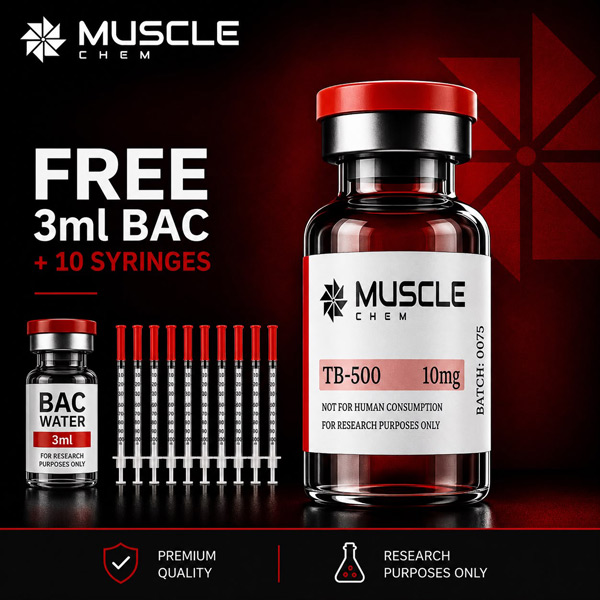
TB500 – 10mg
TB500 is a synthetic peptide fragment related to thymosin beta-4, used for its effects on cell movement, structural organization, and natural repair-related processes in biological systems.
- Next-day UK delivery
- Increased Healing process
- Blood vessel studies
- Advance Tissue repair
- Inflammation & Cellular migration
Original price was: £44.99.£34.99Current price is: £34.99.
- Description
- Reviews (13)
Description
What is TB500?
TB500 is a synthetic peptide fragment associated with research on thymosin beta-4 (Tβ4), an endogenous actin-binding peptide. Thymosin beta-4 is a 43-amino-acid peptide involved in regulation of the cytoskeleton through binding to globular actin (G-actin), influencing actin polymerization dynamics and cellular motility. Research into thymosin beta-4 has focused on its involvement in cellular migration, angiogenesis, extracellular matrix remodeling, and inflammatory signaling.
Studies suggest that thymosin beta-4-related pathways may influence processes such as endothelial cell migration, fibroblast activity, and tissue response following injury. Reported mechanisms include modulation of actin dynamics and regulation of signaling pathways involved in cellular repair processes. Research areas have included wound healing biology, cardiovascular remodeling, muscle and tendon repair models, ocular biology, and inflammatory regulation. Many findings are based on thymosin beta-4 research rather than independently validated clinical studies of TB500 itself.
What Is It Used For and Its Purpose
TB500 is primarily studied as a research tool for investigating peptide-mediated regulation of cellular movement, cytoskeletal organization, and tissue response mechanisms. Because it is related to thymosin beta-4 biology, researchers examine its potential relevance in models involving actin regulation, cell migration, vascular biology, and repair-associated signaling pathways.
Preclinical studies involving thymosin beta-4-related peptides have investigated biological systems including endothelial cells, fibroblasts, muscle cells, and nervous system-related models. The compound is of interest because cellular migration, angiogenesis, and extracellular matrix remodeling are important processes in tissue adaptation and regeneration research. Research interest in TB500 is driven by its connection to fundamental molecular pathways involved in cellular structure and movement.
Research Applications
- Tissue repair and cellular regeneration research
- Cytoskeletal regulation and actin biology
- Angiogenesis and vascular biology studies
- Inflammation signaling research
- Musculoskeletal biology research
- Wound healing and extracellular matrix studies
- Cardiovascular remodeling research
- Neurobiology and cellular migration studies
Potential Scientific Benefits
Research involving thymosin beta-4 and related peptide fragments has suggested several biological activities associated with cellular repair pathways. Most evidence comes from in vitro experiments and models rather than controlled human studies.
At the molecular level, thymosin beta-4 is known to interact with actin, a major component of the cytoskeleton. Regulation of actin dynamics is essential for cell shape changes, migration, and structural adaptation. Through this mechanism, thymosin beta-4-related compounds have been investigated for their influence on cellular movement and tissue remodeling processes.
Studies have reported potential effects related to angiogenic signaling, including modulation of vascular endothelial growth factor (VEGF)-associated pathways in experimental models. Additional studies have explored possible effects on inflammatory mediator expression, fibrosis-related pathways, and repair-associated cellular responses.
Research models have also investigated thymosin beta-4 biology in areas such as skeletal muscle injury, cardiac tissue remodeling, ocular repair, and nervous system recovery. These findings provide mechanistic interest but should not be interpreted as evidence of therapeutic effectiveness.
Reported biological activities in research include:
- Regulation of actin cytoskeleton dynamics
- Support of cellular migration processes in experimental systems
- Investigation of angiogenesis-related signaling pathways
- Modulation of inflammatory response markers in preclinical models
- Study of extracellular matrix remodeling mechanisms
- Evaluation of cellular repair responses following experimental injury
Molecular mechanisms reported:
- Actin-binding activity associated with cytoskeletal regulation
- Influence on cell migration and structural organization
- Potential interaction with repair-associated signaling pathways
- Possible regulation of angiogenic and inflammatory pathways
Physiological pathways investigated:
- Cytoskeletal remodeling pathways
- Endothelial cell signaling
- Tissue remodeling mechanisms
- Cellular stress and repair responses
Current evidence remains limited, and further well-controlled clinical studies are required to establish long-term efficacy and safety in humans.
Research Data Sheet
- Peptide name: TB500 (thymosin beta-4-related peptide fragment)
- Sequence: Not fully characterized across all commercial preparations; reported as a 17-amino-acid fragment
- Classification: Synthetic peptide fragment
- Molecular Formula: C₂₁₂H₃₅₀N₅₆O₇₈S (reported; verification recommended)
- Molecular Weight: Approximately 4963.5 g/mol (reported)
- CAS Number: 885340-08-9 (reported)
- PubChem CID: 62707662 (reported)
- Form: Lyophilized powder
- Appearance: White lyophilized powder
- Purity: ≥99% HPLC verified (supplier-reported)
- Solubility: Research-dependent
- Storage: -20°C recommended for unreconstituted material; refrigerated storage after reconstitution according to validated laboratory procedures
- Research Categories: Peptide pharmacology, cytoskeletal biology, cellular migration, angiogenesis research, tissue remodeling research
Safety Precautions
TB500 is supplied strictly for laboratory research use only. Laboratory personnel should handle this compound according to institutional safety procedures for synthetic peptides and research chemicals. Because comprehensive human safety data are not available, potential biological effects and long-term exposure risks remain incompletely understood.
- Research use only
- Not for human consumption
- Not intended to diagnose, treat, or prevent disease
- Use appropriate personal protective equipment (PPE), including gloves, lab coat, and eye protection
- Apply aseptic handling techniques during laboratory preparation
- Maintain proper storage conditions to preserve peptide stability
- Avoid repeated freeze–thaw cycles
- Ensure proper labeling, documentation, and inventory control
- Dispose of materials according to applicable laboratory waste regulations
- Limited human safety data are available
- Potential unknown long-term biological effects should be considered
Conclusion
TB500 is a synthetic peptide research compound associated with thymosin beta-4 biology and investigated for its potential role in cellular migration, cytoskeletal regulation, angiogenesis-related signaling, and tissue remodeling processes. Its primary scientific relevance comes from the biological functions attributed to thymosin beta-4 pathways.
Research to date has primarily involved experiments and models examining mechanisms related to actin regulation, inflammatory signaling, vascular biology, and cellular repair responses. Although these studies provide insight into possible biological activities, direct clinical evidence for TB500 remains limited. As a research compound, TB500 continues to be of interest in peptide pharmacology, molecular biology, regenerative research models, and cellular signaling investigations. Further scientific evaluation is required to better define its molecular characteristics, biological activity, and safety profile.
Stacks Well With...
-
-
Peptides
IGF-1 LR3 | 1mg (Insulin-like Growth Factor-1)
Original price was: £69.99.£59.99Current price is: £59.99. -
Peptides
CJC-1295 (No DAC)
Price range: £39.99 through £79.99Select options This product has multiple variants. The options may be chosen on the product page -
-
Peptides
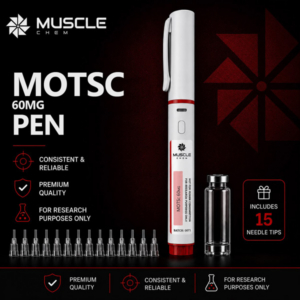
MOTS C
Price range: £59.99 through £99.99Select options This product has multiple variants. The options may be chosen on the product page -
-
-

Jonathan B –
The purity levels are exceptionally sharp, clearing 99.5% on our analytical charts. The structural integrity of the lyophilized powder provides highly precise baseline data for our localized tissue-repair sequences.
Brooke H –
Securing a true, high-concentration 10mg TB-500 vial without core degradation is difficult. MuscleChem’s lyophilization process yields a pristine, intact cake that shows absolutely zero collapse. This makes dividing our cellular assays incredibly streamlined.
Wen Sterling –
The low molecular weight of this peptide enables it to dissolve effortlessly. Upon introducing the solvent under negative pressure, the solution turns completely transparent within five seconds. No clumping, foaming, or particulate residue at the bottom.
Tristan Vance –
We are utilizing MuscleChem’s TB-500 vials specifically to observe endothelial cell differentiation and neovascularization markers in vitro. The structural reliability of the compound from vial to vial has been flawlessly consistent, producing robust, reproducible results
Alaina Finch –
The structural assembly of these vials is top-tier. When introducing bacteriostatic water, the strong vacuum suction instantly verifies a perfect sterile seal. The heavy-duty rubber stopper stands up to repeated micro-samplings without any coring.
Gavin Ross –
Ordered our laboratory’s TB-500 supply on Wednesday afternoon, and tracking had it delivered by Thursday noon. MuscleChem’s UK dispatch speed is phenomenal. Vials were discreetly boxed and heavily padded against transit impacts.
Alistair Vance –
Quality control on this product is excellent. We ran mass spectrometry across two completely separate orders of these 10mg vials, and the peptide sequencing peaks mapped out identically. Absolutely zero unwanted molecular variance.
Dr. Imogen Beaumont –
The flip-off caps are tightly crimped and the glass structure is highly durable. MuscleChem clearly treats their peptide line with professional-grade standards. It’s easily the most reliable source for premium research gear in the UK.
Fraser Campbell –
Data collected during our cellular up-regulation testing block has been 100% stable. Zero anomalies or unexpected variations in reactivity between different vials in the same batch. Essential for high-standard laboratory control.
Dr. Tabitha –
We stored our reconstituted TB-500 samples at 2–8°C over a multi-week observational timeline, and the compound maintained perfect molecular weight distribution without any early precipitation or degradation. Outstanding value.
Hugo Beaumont –
It’s highly active in our cellular repair models and contains none of the impurities common with cheap, unverified vendors. MuscleChem continues to be our gold standard provider.
Vanessa Thorne –
Since TB-500 is highly sensitive to light, I highly appreciate MuscleChem’s meticulous packaging layout.
Dr. Gideon S –
Five stars across the board for chemical purity, rapid order dispatch, and customer support responsiveness. If you are looking for high-grade 10mg TB-500 vials that deliver flawless experimental replication, look no further.