
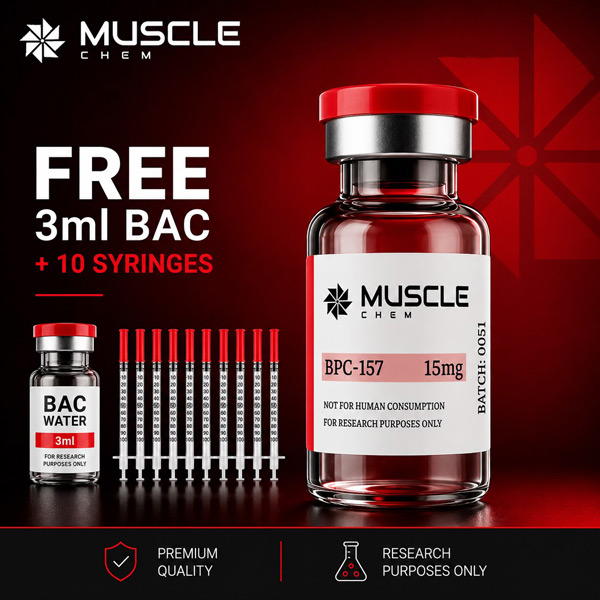
BPC-157 – 15mg
BPC-157 is a synthetic pentadecapeptide studied for its role in tissue repair, angiogenesis, and cellular regeneration across multiple biological systems. It is used in research to investigate healing mechanisms, connective tissue biology, and regenerative processes.
- Next-day UK delivery
- Tissue repair
- Wound healing
- Joint and tendon research
- Gut health research
- Cellular regeneration
Original price was: £69.99.£59.99Current price is: £59.99.
- Description
- Reviews (12)
Description
BPC-157 (Body Protection Compound-157) – The Wolverine Peptide
BPC-157 (Body Protection Compound-157) is a Pentadecapeptide (15-amino acid peptide) derived from a partial sequence of a naturally occurring protein found in human gastric juice known as Body Protection Compound (BPC). Although the endogenous parent protein has been investigated for its role in gastrointestinal homeostasis, BPC-157 itself is a synthetic research peptide developed to study mechanisms involved in tissue repair, angiogenesis, inflammation, and cellular regeneration.
Unlike peptides that act through a single well-defined receptor, the precise molecular target of BPC-157 has not been fully characterized. Current evidence suggests that it may influence several biological pathways involved in tissue remodeling, including nitric oxide (NO) signaling, angiogenic processes, extracellular matrix remodeling, growth factor regulation, and inflammatory responses. However, many of these mechanisms remain incompletely understood.
Because of its broad experimental activity across multiple organ systems, BPC-157 has become a frequently studied research compound in regenerative biology, musculoskeletal physiology, gastrointestinal research, and neuroscience. Preclinical investigations have examined its potential effects on tendon healing, ligament repair, skeletal muscle regeneration, peripheral nerve recovery, and gastrointestinal mucosal protection.
Product Specifications
- Ultra-pure (>99%) – independently lab-tested
- Supports research in tissue regeneration, joint repair, and gut healing
- Supplied as a lyophilized powder for reconstitution
Product Contents
- Form: Lyophilised powder
- Bacteriostatic Water
- 10 Sterile syringes
What Is It Used For and Its Purpose
BPC-157 is primarily utilized as an experimental peptide in studies investigating tissue regeneration, wound healing, and cellular repair mechanisms. Researchers employ it to better understand the biological processes governing recovery following injury to musculoskeletal, gastrointestinal, vascular, and nervous tissues.
The peptide has attracted attention because experimental findings suggest it may influence multiple biological pathways involved in angiogenesis, extracellular matrix remodeling, inflammatory regulation, and cellular migration. These properties make BPC-157 a useful research tool for investigating coordinated tissue repair rather than isolated molecular targets.
Scientific interest also extends to gastrointestinal physiology, where BPC-157 has been investigated in laboratory models of mucosal injury, ulcer formation, and epithelial regeneration. Additional studies have explored its potential influence on peripheral nerve regeneration, tendon healing, and vascular biology.
Research Applications
- Regenerative medicine
- Inflammation research
- Musculoskeletal biology
- Gastrointestinal physiology
- Neurobiology
- Angiogenesis research
- Wound healing
- Connective tissue biology
- Cardiovascular physiology
- Molecular signaling
Potential Scientific Benefits
Preclinical studies have demonstrated that BPC-157 may influence several biological processes involved in tissue repair and regeneration. In vitro investigations have reported enhanced fibroblast migration, increased cellular proliferation, and modulation of extracellular matrix formation. Animal studies have further suggested improvements in tendon, ligament, skeletal muscle, and peripheral nerve healing following experimental injury.
One of the most frequently investigated mechanisms involves angiogenesis. Experimental evidence suggests that BPC-157 may modulate vascular endothelial growth factor (VEGF)-associated signaling and nitric oxide pathways, potentially supporting new blood vessel formation and improving local tissue perfusion during repair processes. However, these mechanisms remain under active investigation and have not been fully characterized.
Studies have also explored anti-inflammatory and cytoprotective effects. Experimental models have reported reductions in inflammatory mediators and oxidative stress markers, along with preservation of gastrointestinal mucosal integrity in various injury models. These observations have generated interest in gastrointestinal research, although clinical confirmation remains limited.
Additional research has investigated neuroprotective mechanisms, including neuronal survival, peripheral nerve regeneration, and functional recovery following experimental neurological injury. While these findings are biologically plausible, robust human clinical evidence remains limited, and the relevance of these effects to clinical applications has not been established.
- Observed biological activities in research:
- Enhanced tissue repair responses
- Increased angiogenesis in experimental models
- Modulation of inflammatory processes
- Support of connective tissue remodeling
- Gastrointestinal mucosal protection in animal studies
- Molecular mechanisms reported:
- Modulation of nitric oxide signaling
- Influence on VEGF-associated angiogenic pathways
- Regulation of extracellular matrix remodeling
- Modulation of inflammatory signaling
- Cellular migration and proliferation during tissue repair
- Physiological pathways involved:
- Tissue regeneration
- Angiogenesis
- Wound healing
- Gastrointestinal mucosal homeostasis
- Peripheral nerve repair
- Connective tissue remodeling
- Experimental outcomes in models:
- Improved tendon and ligament healing
- Accelerated wound closure
- Enhanced muscle regeneration
- Protection of gastrointestinal tissues
- Improved functional recovery following experimental nerve injury
Current evidence remains limited, and further well-controlled clinical studies are required to establish long-term efficacy and safety in humans.
Research Data Sheet
- Peptide name: BPC-157
- Sequence: GEPPPGKPADDAGLV
- Classification: Synthetic regenerative peptide
- Molecular Formula: Not available
- Molecular Weight: Approximately 1,419.5 Da
- CAS Number: 137525-51-0
- PubChem CID: 9941957
- Form: Lyophilized powder
- Appearance: White to off-white lyophilized powder
- Purity: Not available
- Solubility: Research-dependent
- Storage: Refrigerated or frozen according to laboratory protocol
- Research Categories: Regenerative medicine, inflammation research, musculoskeletal biology, neurobiology, gastrointestinal physiology, angiogenesis
Safety Precautions
BPC-157 is supplied exclusively for laboratory research and should only be handled by qualified personnel using established laboratory safety procedures. It is not approved for diagnostic, therapeutic, veterinary, or human consumption and should be used only in authorized research settings. Human safety data remain limited, and the complete pharmacological and toxicological profile has not been established. Appropriate laboratory practices should be followed to ensure safe handling, storage, documentation, and disposal.
- Research use only
- Not for human consumption
- Not intended to diagnose, treat, or prevent disease
- Wear appropriate PPE (gloves, laboratory coat, and eye protection)
- Maintain aseptic handling procedures
- Store under recommended laboratory conditions
- Avoid repeated freeze–thaw cycles
- Maintain accurate labeling and documentation
- Dispose of waste according to institutional and regulatory requirements
- Limited human safety data
- Potential unknown long-term effects
Conclusion
BPC-157 is a synthetic peptide that has become an important subject of investigation in regenerative biology because of its reported effects on tissue repair, angiogenesis, and inflammatory regulation in experimental systems. Its broad range of biological activities has made it a valuable research tool for studying mechanisms of healing across multiple organ systems.
Preclinical investigations have demonstrated promising findings in musculoskeletal, gastrointestinal, vascular, and neurological models, providing insight into the complex signaling pathways involved in cellular repair and tissue remodeling. Although its precise molecular mechanisms have not been fully characterized, BPC-157 continues to attract scientific interest for studies involving connective tissue biology, wound healing, gastrointestinal physiology, and regenerative medicine.
Stacks Well With...
-
Peptides
CJC-1295 (No DAC)
Price range: £39.99 through £79.99Select options This product has multiple variants. The options may be chosen on the product page -
-
Peptides
MOTS C
Price range: £59.99 through £99.99Select options This product has multiple variants. The options may be chosen on the product page -
Peptides
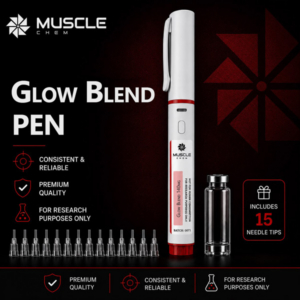
Glow Blend
Price range: £64.99 through £139.99Select options This product has multiple variants. The options may be chosen on the product page -
-
-
-
Peptides
Klow
Price range: £74.99 through £149.99Select options This product has multiple variants. The options may be chosen on the product page


Alex R –
Helped my shoulder pain recover much faster. Mobility is noticeably better now.
Brandon T –
Excellent for healing and recovery. Joint discomfort has reduced a lot.
Chris W. –
I noticed less inflammation and faster muscle recovery within a short time.
Daniel K. –
Great product for injury support. My elbow feels stronger every week.
Ethan S. –
Recovery between workouts is much quicker. Soreness doesn’t last as long anymore.
Frank L. –
Helped with tendon pain and overall joint comfort. Very impressed so far.
Greg P. –
Solid quality BPC-157. My knee feels more stable and pain-free.
Henry J. –
Improved healing and flexibility. Definitely helped with long-term aches.
Isaac M. –
Great support for muscle and tissue recovery. Feeling stronger and more mobile.
Jason D. –
Helped me return to training after an injury. Recovery speed is excellent.
Kyle N. –
Reduced soreness and inflammation noticeably. Works exactly as expected.
Liam C. –
One of the best recovery products I’ve used. Joints feel healthier overall.