
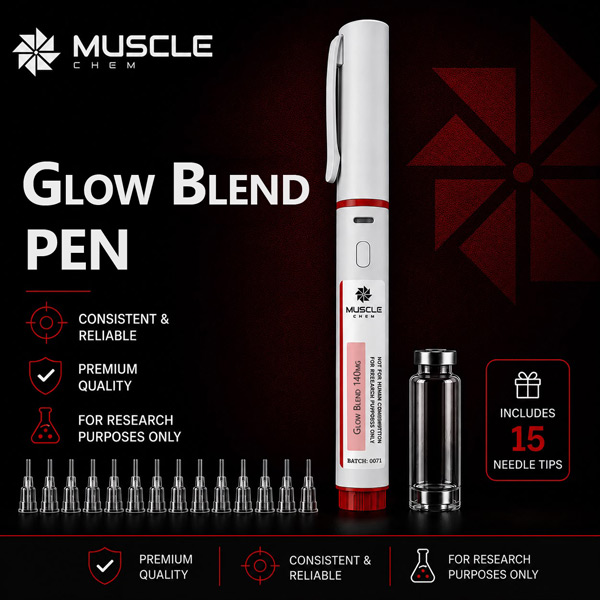
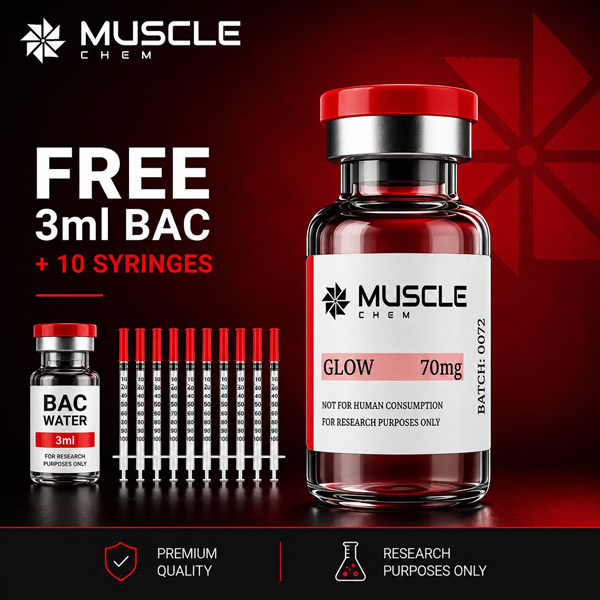
Glow Blend
Glow Blend is a multi-peptide research formulation combining BPC-157, TB-500, and GHK-Cu, designed for investigative studies in tissue repair, inflammation modulation, and extracellular matrix remodeling. This blend is primarily applied in preclinical research examining wound healing, cellular migration, collagen synthesis, and coordinated regenerative responses across multiple tissue systems.
- Next-day UK delivery
- Tissue regeneration, wound healing, and repair mechanisms
- Study of angiogenesis, cell migration, and cytoskeletal remodeling pathways
- Collagen synthesis, extracellular matrix regulation, and skin biology
- Exploration of inflammatory modulation and oxidative stress responses
Stabilized Formula
No Ice Packs Required
Transit-Safe
Price range: £64.99 through £139.99
| Quantity | Discount |
|---|---|
| Buy 3 | 10% |
| Buy 4 | 12% |
| Buy 5+ | 15% |
- Description
- Reviews (12)
Description
Glow Blend – Regenerative Peptide Complex for Skin, Healing & Anti-Ageing
Glow Blend is a synergistic peptide formulation combining three powerful compounds: BPC-157, TB-500, and GHK-Cu. This advanced blend is engineered to promote tissue repair, wound healing, collagen synthesis, and skin rejuvenation while also supporting systemic recovery and cellular regeneration.
BPC-157 has been investigated for its effects on angiogenic signaling, cytoprotection, and gastrointestinal and musculoskeletal repair processes. TB-500 is associated in research models with actin cytoskeleton modulation, cellular migration, and tissue remodeling through thymosin beta-4–related pathways. GHK-Cu is widely studied for its role in copper-dependent enzymatic activity, collagen synthesis, antioxidant defense, and gene expression regulation linked to tissue repair.
Together, these peptides provide a multi-targeted experimental framework for studying wound healing biology, inflammatory signaling cascades, and regenerative tissue dynamics. Research interest in such combinations stems from the hypothesis that overlapping repair pathways (angiogenesis, extracellular matrix remodeling, and anti-inflammatory signaling) may act synergistically in controlled laboratory environments.
What Is It Used For and Its Purpose
GLOW is used in experimental research investigating integrated biological pathways involved in tissue regeneration, inflammation control, and extracellular matrix remodeling. Its primary purpose is to provide a multi-compound model for studying how distinct but overlapping peptide signaling systems may influence repair processes at cellular and tissue levels.
Each component contributes to different biological pathways. BPC-157 is studied in relation to angiogenesis, fibroblast activity, and cytoprotective signaling in gastrointestinal and musculoskeletal models. TB-500 is investigated for its role in actin-binding protein dynamics, influencing cell migration, tissue remodeling, and structural repair processes. GHK-Cu contributes copper-dependent signaling effects associated with collagen synthesis, oxidative stress modulation, and gene expression regulation.
In combination, these peptides are utilized in research exploring coordinated regenerative responses, particularly in systems where inflammation, vascular repair, and extracellular matrix restructuring occur simultaneously. This includes musculoskeletal injury models, epithelial repair studies, and inflammatory tissue response investigations.
Research Applications:
- Tissue regeneration and wound healing biology
- Angiogenesis and vascular remodeling research
- Inflammatory pathway modulation
- Extracellular matrix and collagen regulation
- Musculoskeletal repair mechanisms
- Epithelial and gastrointestinal tissue studies
- Oxidative stress and antioxidant signaling research
- Regenerative and aging biology models
Potential Scientific Benefits
Current understanding of the GLOW formulation is derived from independent studies of its individual peptide components rather than validated combination-based clinical research. Evidence is primarily preclinical, including in vitro and animal model studies, with limited translational human data.
BPC-157 has been associated in experimental models with enhanced tissue repair signaling, angiogenesis-related activity, and modulation of inflammatory mediators. TB-500 has been studied for its role in cellular migration and cytoskeletal organization, which are important processes in tissue regeneration and repair. GHK-Cu has demonstrated activity in regulating gene expression related to collagen synthesis, antioxidant defense systems, and inflammatory signaling pathways.
While each peptide shows biological activity in distinct but potentially complementary pathways, the combined effects of these agents in a single formulation remain largely theoretical and require further controlled research. The concept of multi-peptide synergy is an area of growing scientific interest, particularly in regenerative medicine and systems biology approaches to tissue repair.
- Modulation of angiogenesis-related signaling pathways (BPC-157)
- Regulation of actin cytoskeleton and cell migration (TB-500)
- Influence on collagen synthesis and extracellular matrix remodeling (GHK-Cu)
- Anti-inflammatory signaling modulation across multiple pathways
- Potential effects on oxidative stress regulation and antioxidant responses
- Support of tissue repair processes in preclinical injury models
- Gene expression changes associated with regenerative biology pathways
Current evidence remains limited, and further well-controlled clinical studies are required to establish long-term efficacy and safety in humans.
Research Data Sheet
GLOW is a multi-peptide research blend composed of BPC-157, TB-500, and GHK-Cu, studied in regenerative biology and tissue repair research contexts.
- Product: GLOW peptide blend
- Components: BPC-157 / TB-500 / GHK-Cu
- Classification: Multi-peptide regenerative research formulation
- Form: Lyophilized powder blend
- Appearance: White to off-white powder
- Purity: ≥98% (component-dependent)
- Solubility: Sterile aqueous solution (research-dependent handling)
- Storage: 2–8°C short term; -20°C long term
- CAS Numbers:
- BPC-157: 137525-51-0
- TB-500: 885340-08-9
- GHK-Cu: 49557-75-7 (commonly cited variant)
- Molecular Formulas:
- BPC-157: C62H98N16O22
- TB-500: C38H68N10O14
- GHK-Cu: C14H22CuN6O4
- Research Categories: tissue repair, angiogenesis, inflammation research, regenerative medicine, musculoskeletal biology, extracellular matrix studies, oxidative stress research
Safety Precautions
GLOW is intended strictly for laboratory research use and must only be handled by qualified personnel trained in peptide handling, biochemical preparation, and laboratory safety procedures. Due to limited clinical validation of multi-peptide combinations and the investigational nature of each component outside approved medical indications, appropriate precautions must be observed during handling, storage, and disposal.
- Research use only
- Not for human consumption
- Not intended to diagnose, treat, or prevent disease
- Use appropriate PPE (gloves, lab coat, eye protection)
- Handle under aseptic laboratory conditions where required
- Store under recommended refrigerated or frozen conditions
- Avoid repeated freeze–thaw cycles after reconstitution
- Maintain proper labeling and traceability in laboratory environments
- Dispose of materials in accordance with institutional biosafety guidelines
- Limited safety data for combined peptide administration
Conclusion
GLOW is a multi-peptide research formulation designed to support experimental investigation into interconnected pathways of tissue regeneration, inflammation modulation, and extracellular matrix remodeling. By combining BPC-157, TB-500, and GHK-Cu, it provides a multi-targeted model for studying how angiogenesis, cytoskeletal dynamics, and copper-dependent gene regulation may interact in regenerative biological systems.
Research into each component suggests individual roles in wound healing biology, cellular migration, collagen synthesis, and inflammatory control. However, the combined effects of these peptides remain largely theoretical and are not yet established through rigorous clinical evaluation. As such, GLOW is best understood as an exploratory research tool rather than a validated therapeutic system.
Stacks Well With...
-
Peptides
BPC-157 + TB-500
Price range: £59.99 through £99.99Select options This product has multiple variants. The options may be chosen on the product page -
-
Peptides
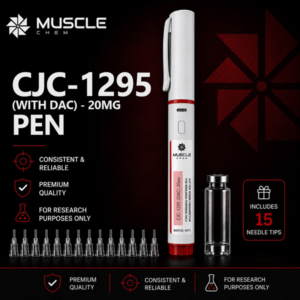
CJC-1295 (with DAC)
Price range: £44.99 through £89.99Select options This product has multiple variants. The options may be chosen on the product page -
Peptides
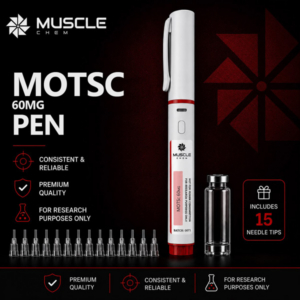
MOTS C
Price range: £59.99 through £99.99Select options This product has multiple variants. The options may be chosen on the product page -
Peptides
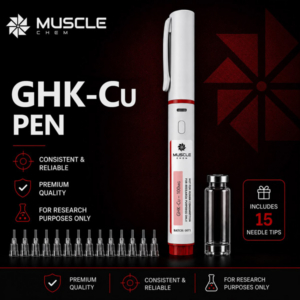
GHK-Cu
Price range: £39.99 through £74.99Select options This product has multiple variants. The options may be chosen on the product page -
-
-

Amelia R. –
Glow Blend noticeably improved my skin clarity and overall glow. Skin feels healthier and brighter.
Bianca T. –
My skin looks more hydrated and even-toned since starting this. Very happy with the results.
Celeste M. –
Great for skin support and overall wellness. I’ve noticed a natural, healthy glow.
Danielle K. –
Glow Blend helped improve my skin texture and elasticity. Looks smoother and refreshed.
Elise P. –
Skin feels more nourished and radiant. Also noticed stronger hair and nails.
Fiona L. –
This blend really supports skin health. My complexion looks clearer and brighter.
Giselle W. –
Noticed improved hydration and a more youthful appearance overall.
Harper J. –
Glow Blend made my skin feel softer and more balanced. Very gentle and effective.
Isla C. –
Helped with dull skin and dryness. My face looks healthier and more vibrant.
Juliet S. –
Great results for skin glow and wellness. I feel more confident in my skin.
Kayla D. –
My skin tone looks more even, and I’m seeing a natural radiance.
Lillian B. –
Glow Blend delivers exactly what it promises. Skin looks fresh and revitalized.