
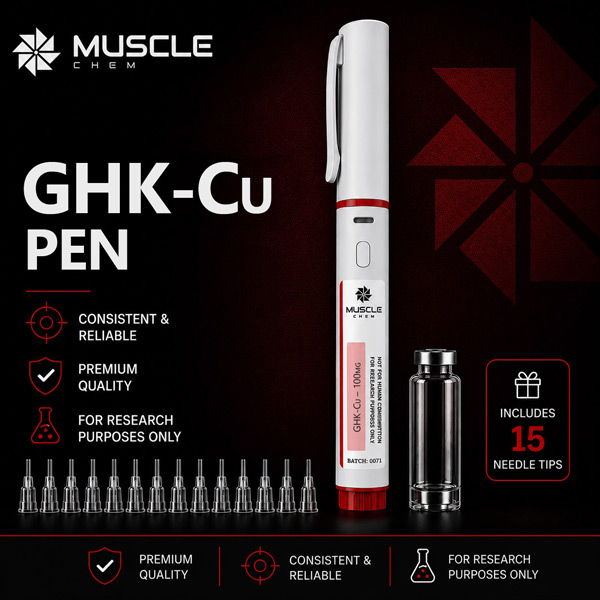
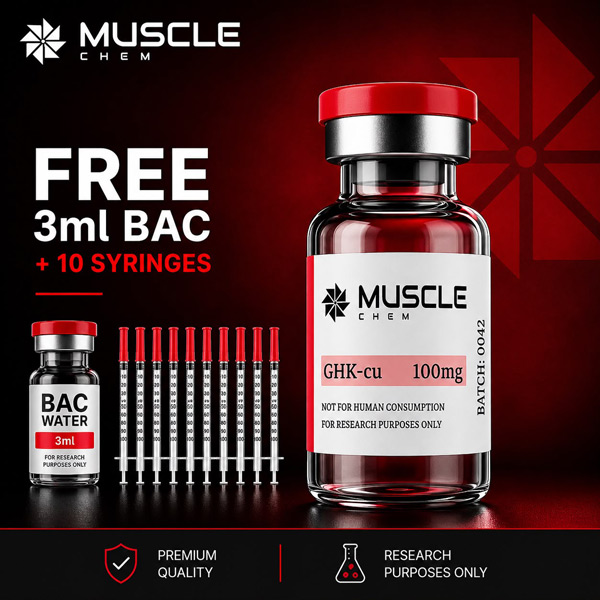
GHK-Cu
GHK-Cu is a copper-binding tripeptide (Gly–His–Lys) studied for its role in tissue repair, extracellular matrix remodeling, and skin regeneration. It is widely used in research exploring collagen synthesis, wound healing, and cellular signaling pathways involved in inflammation and oxidative stress regulation.
- Next-day UK delivery
- Wound healing, skin regeneration, and fibroblast activity
- Investigation of collagen synthesis and extracellular matrix remodeling
- Inflammatory signaling and oxidative stress modulation
- Exploration of tissue repair, aging, and regenerative biology pathways
Stabilized Formula
No Ice Packs Required
Transit-Safe
Price range: £39.99 through £74.99
| Quantity | Discount |
|---|---|
| Buy 3 | 10% |
| Buy 4 | 12% |
| Buy 5+ | 15% |
- Description
- Reviews (12)
Description
GHK-Cu – Copper Peptide for Skin, Hair & Tissue Regeneration Studies
GHK-Cu (Copper Peptide) is a bioactive complex of the tripeptide GHK bound to copper (II). It is widely researched for its roles in collagen synthesis, extracellular matrix remodeling, and overall skin rejuvenation, making it a leading peptide in cosmetic and regenerative research.
GHK-Cu is studied as a multifunctional signaling modulator that influences gene expression related to tissue repair, extracellular matrix remodeling, and cellular stress responses. Research suggests it may interact with pathways including SIRT1 activation, NF-κB suppression, MAPK signaling modulation, and TGF-β/Smad downregulation. Through these pathways, it is associated with regulation of inflammation, collagen synthesis, angiogenesis, and antioxidant defense systems such as superoxide dismutase (SOD) activity.
It has been extensively investigated in dermatological and regenerative medicine research due to its apparent ability to support extracellular matrix renewal, improve wound healing dynamics, and influence fibroblast activity. Overall, GHK-Cu is considered a bioactive copper-binding peptide with broad research relevance in regenerative biology, inflammatory regulation, and tissue repair mechanisms.
What Is It Used For and Its Purpose
GHK-Cu is primarily used in biochemical and biomedical research exploring tissue repair, extracellular matrix regulation, and cellular stress response mechanisms. It is particularly valued for its ability to model copper-dependent biological signaling in skin regeneration, wound healing, and inflammation-related tissue remodeling.
Beyond dermatological applications, GHK-Cu has been investigated in models of pulmonary injury, neurodegeneration, and systemic aging processes. These studies examine its potential role in reducing fibrotic signaling, supporting neuronal resilience, and modulating oxidative stress in high-metabolic-demand tissues.
Research Applications:
- Dermatological and skin biology research
- Wound healing and tissue regeneration
- Inflammation and oxidative stress studies
- Extracellular matrix and collagen remodeling
- Neurobiology and neuroprotection research
- Pulmonary fibrosis and lung injury models
- Aging and regenerative biology
- Gene expression and epigenetic regulation studies
Potential Scientific Benefits
Current scientific literature on GHK-Cu indicates broad biological activity across multiple tissue systems, largely supported by in vitro experiments, animal models, and limited human studies. Its multifunctional profile is attributed to its ability to bind copper and modulate gene expression involved in tissue repair and inflammatory control.
Research suggests that GHK-Cu may enhance wound healing by promoting fibroblast activity, improving collagen and elastin synthesis, and supporting angiogenesis. These processes are essential for proper tissue regeneration and structural repair. In addition, its modulation of inflammatory signaling pathways such as NF-κB and MAPK has been associated with reduced cytokine activity and oxidative stress markers in experimental models.
In dermatological studies, GHK-Cu has been associated with improved skin elasticity, increased dermal density, and reduced visible signs of photoaging, likely due to its effects on extracellular matrix remodeling. In pulmonary and neurological research models, it has shown potential protective effects against inflammatory injury, fibrosis, and oxidative stress–induced cellular damage, although these findings remain primarily preclinical.
Overall, GHK-Cu is considered a pleiotropic signaling peptide with activity across repair, inflammatory regulation, and oxidative balance pathways, making it a widely studied compound in regenerative and anti-aging research contexts.
- Modulation of collagen and elastin synthesis in connective tissue models
- Regulation of inflammatory cytokines via NF-κB and MAPK pathways
- Activation of antioxidant defenses including SOD-related activity
- Influence on TGF-β/Smad signaling involved in fibrosis regulation
- Promotion of angiogenesis and tissue remodeling in wound models
- Support of fibroblast proliferation and extracellular matrix repair
- Observed neuroprotective and anti-inflammatory effects in preclinical studies
Current evidence remains limited, and further well-controlled clinical studies are required to establish long-term efficacy and safety in humans.
Research Data Sheet
GHK-Cu is a copper-binding tripeptide widely studied in regenerative biology, dermatology, and inflammatory modulation research.
- Compound: GHK-Cu (Copper Tripeptide-1)
- Sequence: Gly–His–Lys (Cu²⁺ complex)
- Classification: Endogenous copper-binding tripeptide
- Molecular Formula: C14H22CuN6O4
- Molecular Weight: 401.91 g/mol
- CAS Number: 49557-75-7
- Form: Lyophilized powder
- Appearance: White to off-white solid
- Purity: ≥98%
- Solubility: Soluble in sterile aqueous solutions (research-dependent)
- Storage: 2–8°C short term; -20°C long term
- Research Categories: Tissue regeneration, dermatology, inflammation research, oxidative stress, neurobiology, pulmonary biology, aging research
Safety Precautions
GHK-Cu is supplied strictly for laboratory research use and must only be handled by trained professionals experienced in peptide chemistry and biochemical research protocols. Due to limited comprehensive human safety data outside topical and experimental contexts, appropriate laboratory safety procedures must be followed during handling, preparation, and disposal.
- Research use only
- Not for human consumption
- Not intended to diagnose, treat, or prevent disease
- Use appropriate PPE (gloves, lab coat, eye protection)
- Handle under aseptic laboratory conditions
- Store at recommended refrigerated or frozen conditions
- Avoid repeated freeze–thaw cycles after reconstitution
- Ensure proper labeling and traceability in laboratory settings
- Dispose of materials according to institutional biosafety guidelines
- Limited systemic human safety data available
Conclusion
GHK-Cu is a biologically active tripeptide–copper complex that plays a significant role in research exploring tissue regeneration, inflammatory modulation, and extracellular matrix remodeling. Its ability to influence multiple signaling pathways, including oxidative stress regulation, growth factor signaling, and collagen synthesis, makes it a widely studied molecule in regenerative and dermatological science.
Preclinical and limited clinical research suggests that GHK-Cu may support wound healing processes, improve skin structural integrity, and modulate inflammatory responses in various tissue systems. Its potential roles in pulmonary protection, neurobiological resilience, and aging-related tissue decline further expand its relevance in biomedical research.
Despite extensive experimental data, most findings remain derived from non-clinical or limited human studies, and its broader systemic effects are still under investigation. As such, GHK-Cu remains an important research tool for studying complex biological repair and signaling systems.
Stacks Well With...
-
-
-
Peptides
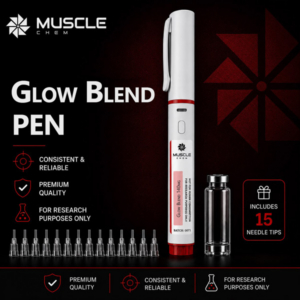
Glow Blend
Price range: £64.99 through £139.99Select options This product has multiple variants. The options may be chosen on the product page -
-
-
-
Peptides
Klow
Price range: £74.99 through £149.99Select options This product has multiple variants. The options may be chosen on the product page -


Blake R. –
Noticed firmer, more youthful skin. Great product for daily skincare support.
Adrian P. –
GHK-Cu improved my skin texture and overall appearance. Skin feels healthier and smoother.
Caleb T. –
My complexion looks brighter and more even. Very happy with the results.
Dominic L. –
GHK-Cu helped reduce fine lines and improve skin elasticity. Feels revitalized.
Elias M. –
Skin feels more hydrated and nourished. Overall tone looks fresher and more radiant.
Finn W. –
Great for anti-aging and skin health. Noticeable improvement in texture and glow.
Grant S. –
My skin looks healthier and rejuvenated. Fine lines appear reduced.
Harrison K. –
Excellent peptide for skin support. Skin feels smoother and firmer.
Ian C. –
GHK-Cu visibly improved my skin’s overall health and appearance. Highly recommend.
Julian P. –
Skin tone is more even, and texture has improved significantly since use.
Kyle D. –
Great product for skin rejuvenation. Noticeable firmness and glow after a few weeks.
Liam B. –
Skin feels nourished and looks more youthful. Very satisfied with the results.