
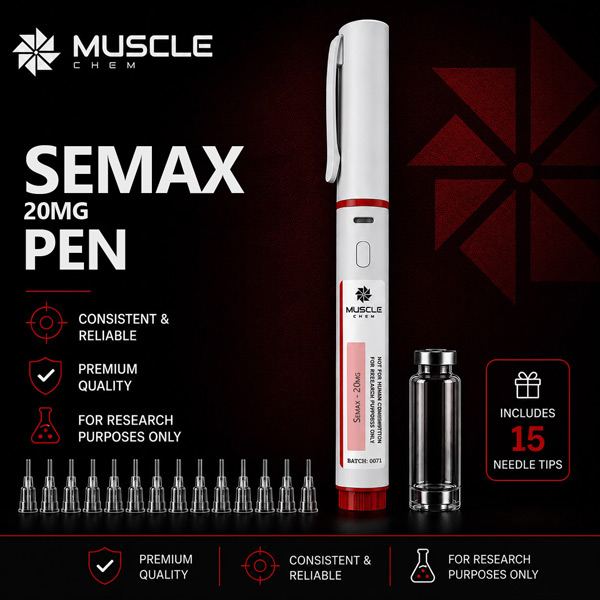
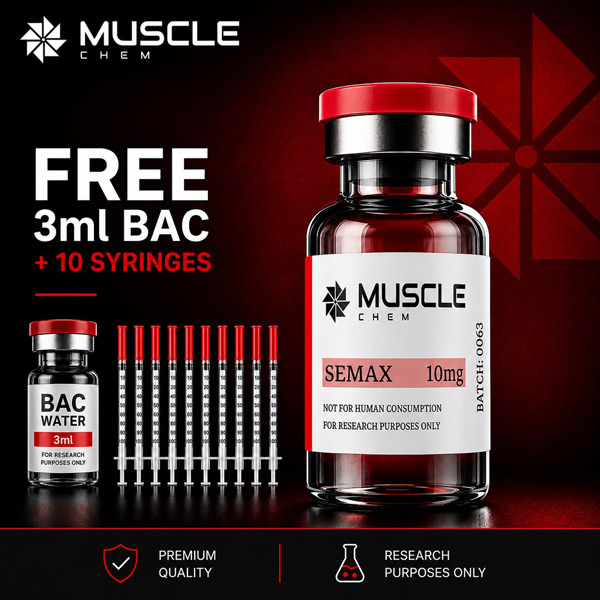
Semax
Semax is a synthetic ACTH(4–7) analogue that functions as a neuroactive peptide, modulating neurotrophic, neurotransmitter, and inflammatory pathways involved in neuronal function and plasticity.
- Next-day UK delivery
- Supports memory & learning
- Brain health research
- Improves Cognitive function
- Nerve cell protection
Stabilized Formula
No Ice Packs Required
Transit-Safe
Price range: £34.99 through £79.99
| Quantity | Discount |
|---|---|
| Buy 3 | 10% |
| Buy 4 | 12% |
| Buy 5+ | 15% |
- Description
- Reviews (12)
Description
Semax is a synthetic heptapeptide derived from the adrenocorticotropic hormone (ACTH), consisting of the ACTH(4–7) fragment extended with a C-terminal Pro-Gly-Pro (PGP) sequence to improve peptide stability. Unlike native ACTH, Semax does not exhibit the classical endocrine activity associated with stimulation of adrenal corticosteroid release. Instead, it has been extensively investigated as a neuroactive peptide with potential nootropic, neurotrophic, and neuroprotective properties.
Research indicates that Semax may influence multiple molecular pathways involved in neuronal function, synaptic plasticity, cellular stress responses, and neuroinflammation. Studies have demonstrated increased expression of brain-derived neurotrophic factor (BDNF), modulation of neurotransmitter systems including dopaminergic and serotonergic signaling, and alterations in the expression of genes involved in immune regulation and neuronal communication. These effects suggest a multimodal mechanism rather than interaction with a single receptor or signaling pathway.
Semax has attracted considerable attention in neuroscience because of its ability to modulate transcriptional responses following cerebral injury in animal models. Investigations have reported reduced expression of pro-inflammatory cytokine genes, preservation of neurotransmission-related gene expression, and improved neuronal survival under oxidative stress conditions. These observations have positioned Semax as an important research tool for studying molecular mechanisms underlying neuroplasticity, ischemic injury, and neural recovery. Research has explored Semax across a range of experimental models, including cerebral ischemia, neurodegeneration, cognitive dysfunction, spinal cord injury, and behavioral neuroscience.
Product Specifications
- Compound / Peptide Name: Semax
- Classification: Synthetic neuroactive peptide; ACTH(4–7) analogue
- Sequence: Met-Glu-His-Phe-Pro-Gly-Pro (MEHFPGP)
- Molecular Formula: C₃₇H₅₁N₉O₁₀S
- Molecular Weight: 813.92 g/mol
- CAS Number: 80714-61-0
- PubChem CID: Not consistently reported
- Appearance: Not consistently reported
- Storage: Refrigerate at 2–8°C; for long-term storage, maintain at −20°C
- Solubility: Research-dependent
- Regulatory Status: Research compound; regulatory status varies by jurisdiction
What Is It Used For and Its Purpose
Semax is primarily investigated as a research peptide for studying mechanisms of neuronal protection, synaptic plasticity, and neurobiological adaptation following cellular stress or injury. Its broad biological activity has made it valuable in experimental neuroscience, particularly in models examining ischemia, oxidative stress, neuroinflammation, and cognitive function.
The peptide has been extensively evaluated in studies of neurotrophic signaling, where increased BDNF expression and modulation of gene transcription may contribute to adaptive changes within neuronal networks. Additional investigations have explored its influence on neurotransmitter systems, including dopamine and serotonin pathways, as well as its effects on inflammatory mediators and immune-related gene expression.
Researchers also utilize Semax to investigate molecular responses following cerebral ischemia and spinal cord injury, with the aim of understanding endogenous repair mechanisms and cellular resilience. Experimental findings suggest that Semax may alter multiple signaling pathways simultaneously, making it useful for systems-level investigations of nervous system physiology rather than studies targeting a single molecular receptor.
Research Applications
- Neurobiology
- Neuroprotection research
- Neurotrophic signaling
- Cognitive neuroscience
- Synaptic plasticity
- Dopaminergic signaling
- Serotonergic signaling
- Neuroinflammation
- Gene expression and transcriptomics
- Oxidative stress research
- Ischemia and reperfusion biology
- Spinal cord injury research
- Behavioral neuroscience
Potential Scientific Benefits
A substantial body of preclinical evidence suggests that Semax influences several biological processes involved in neuronal adaptation and survival. In vitro experiments and studies consistently demonstrate increased BDNF expression following administration, supporting investigation into mechanisms governing synaptic plasticity, neuronal differentiation, and long-term neuronal maintenance. These observations provide mechanistic insight into how Semax may alter neural network responses under physiological and pathological conditions.
Experimental models of cerebral ischemia have shown that Semax may modulate inflammatory signaling through suppression of multiple pro-inflammatory cytokine genes, including Il1a, Il1b, Il6, Ccl3, and Cxcl2. Transcriptomic analyses additionally indicate alterations in immune-related and vascular-associated gene expression following ischemic injury, suggesting that Semax influences coordinated molecular responses rather than isolated signaling pathways.
Research examining neurotransmission has demonstrated increased activity within dopaminergic and serotonergic systems in rodents following Semax administration. Preservation of genes associated with neurotransmission after ischemia has also been reported, suggesting that the peptide may support maintenance of neuronal communication during periods of cellular stress. These observations remain largely preclinical and require further validation in human populations.
Cell culture experiments have demonstrated improved survival of neuronal cells exposed to oxidative stress after Semax treatment, indicating potential modulation of intracellular stress-response pathways. Additional in vitro studies have reported reduced copper-induced amyloid-β aggregation in artificial membrane models, providing mechanistic insights into peptide–protein interactions relevant to protein aggregation research.
Limited clinical investigations have evaluated Semax in neurological settings, including ischemic stroke and selected neuro-ophthalmological and motor neuron disorders. Although several studies have reported favorable tolerability and functional observations, many were conducted within limited populations and specific healthcare systems.
Observed biological activities in research
- Increased BDNF protein expression
- Modulation of dopaminergic neurotransmission
- Modulation of serotonergic neurotransmission
- Reduced expression of selected pro-inflammatory cytokine genes
- Enhanced neuronal survival during oxidative stress
- Altered immune-related gene expression
- Transcriptomic modulation following cerebral ischemia
Reported molecular mechanisms
- Regulation of neurotrophic signaling
- Modulation of inflammatory gene transcription
- Alteration of neurotransmission-associated gene expression
- Influence on oxidative stress response pathways
- Modulation of immune signaling networks
Physiological pathways involved
- BDNF signaling
- Synaptic plasticity
- Neuroimmune communication
- Dopaminergic pathways
- Serotonergic pathways
- Cellular stress-response mechanisms
- Cerebral ischemia-response pathways
Experimental outcomes in research models
- Improved functional recovery in animal models of cerebral ischemia
- Reduced neuroinflammatory gene expression
- Preservation of neuronal viability during oxidative stress
- Improved performance in selected cognitive and behavioral assays in rodents
- Enhanced recovery following experimental spinal cord injury
Current evidence remains limited, and further well-controlled clinical studies are required to establish long-term efficacy and safety in humans.
Research Data Sheet
- Compound / Peptide Name: Semax
- Sequence: Met-Glu-His-Phe-Pro-Gly-Pro
- Classification: Synthetic ACTH(4–7) analogue; neuroactive peptide
- Molecular Formula: C₃₇H₅₁N₉O₁₀S
- Molecular Weight: 813.92 g/mol
- CAS Number: 80714-61-0
- Purity: 98%
- Solubility: Research-dependent
- Storage: Refrigerate at 2–8°C; −20°C for long-term storage
- Research Categories: Neurobiology; Neuroprotection; Cognitive Neuroscience; Neuroinflammation; Oxidative Stress; Transcriptomics; Neurotransmitter Signaling
Safety Precautions
Semax should be handled exclusively as a laboratory research compound by appropriately trained personnel operating under institutional laboratory safety procedures. Proper laboratory handling, documentation, storage, and disposal procedures should be followed throughout all stages of research to preserve sample integrity and ensure compliance with applicable laboratory regulations.
- Research use only
- Not for human consumption
- Not intended to diagnose, treat, or prevent disease
- Wear appropriate PPE, including gloves, laboratory coat, and eye protection
- Use aseptic handling techniques where appropriate
- Store refrigerated at 2–8°C; maintain at −20°C for long-term storage
- Avoid repeated freeze–thaw cycles
- Maintain proper labeling and laboratory documentation
- Dispose of materials in accordance with institutional and regulatory waste procedures
- Human safety data remain limited
- Long-term biological effects have not been fully characterized
Conclusion
Semax is a well-characterized synthetic neuroactive peptide that has become an important research tool for investigating mechanisms of neuroprotection, synaptic plasticity, gene regulation, and neuronal adaptation to physiological stress. Its design, based on the ACTH(4–7) fragment with a stabilizing Pro-Gly-Pro extension, allows researchers to examine biological effects distinct from the endocrine functions of native ACTH.
Evidence supports investigation of Semax across numerous areas of neuroscience, including cerebral ischemia, oxidative stress, neuroinflammation, neurotransmitter regulation, and cognitive biology. Multiple experimental studies indicate that its biological activity involves coordinated modulation of neurotrophic, inflammatory, and transcriptional pathways rather than a single molecular target.
Although several human studies have reported favorable tolerability and encouraging findings in selected neurological settings, the overall clinical evidence remains relatively limited compared with the extensive preclinical literature. As a result, Semax continues to hold significant value within translational neuroscience and peptide pharmacology research, providing investigators with a versatile model for studying neuronal resilience, molecular signaling, and adaptive responses within the central nervous system.
Stacks Well With...
-
Peptides
IGF-1 LR3 | 1mg (Insulin-like Growth Factor-1)
Original price was: £69.99.£59.99Current price is: £59.99. -
-
-
Peptides
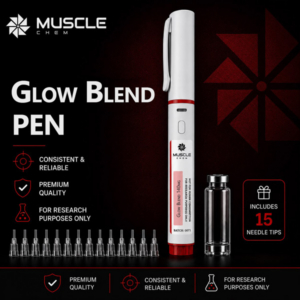
Glow Blend
Price range: £64.99 through £139.99This product has multiple variants. The options may be chosen on the product page -
Peptides
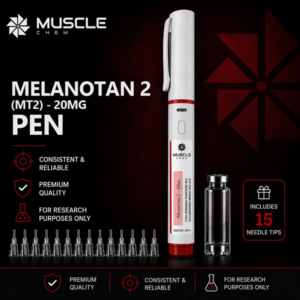
Melanotan 2 (MT2)
Price range: £34.99 through £79.99This product has multiple variants. The options may be chosen on the product page -
Peptides
Melanotan 1 – (MT1)
Price range: £34.99 through £79.99This product has multiple variants. The options may be chosen on the product page -

Archer L. –
Semax helped improve my focus and mental clarity throughout the day.
Blake R. –
Noticed better concentration and cognitive performance during work and study.
Caleb M. –
This peptide really enhances mental alertness and keeps me sharp.
Damian P. –
Improved memory and overall mental performance. Feeling more productive.
Elias T. –
Semax supports focus and cognitive endurance without causing fatigue.
Finn J. –
My clarity of thought and attention span have improved significantly.
Grant K. –
Helps me stay focused during stressful or long workdays. Very effective.
Hudson V. –
Noticed enhanced mental performance and quicker thinking since starting Semax.
Ian C. –
Excellent peptide for cognitive support. Feeling sharper and more alert daily.
Jace D. –
Semax improved my concentration, focus, and mental stamina noticeably.
Kieran T. –
Supports cognitive function and keeps me alert without jitters or crashes.
Leo B. –
Great for brain support, mental clarity, and focus during intense tasks.