Pros, Cons, Red Flags & Side Effects of SNAP-8
SNAP-8 has attracted considerable attention within cosmetic science and peptide research because of its relationship to the SNAP-25 protein and its proposed ability to influence processes involved in neurotransmitter release. Unlike botulinum toxin, SNAP-8 is a synthetic biomimetic peptide that does not enzymatically cleave SNAP-25. Instead, it has been investigated for its potential to interfere partially with interactions involved in SNARE complex formation.
In cosmetic research, SNAP-8 has primarily been studied in relation to the appearance of facial wrinkles, skin elasticity, hydration, collagen-related processes, and other aspects of skin aging. However, it is important to distinguish cosmetic research findings from established medical benefits. Evidence concerning long-term safety, systemic exposure, broader biological effects, and therapeutic applications remains limited. The 5mg format is generally presented as a research-grade peptide product rather than an approved medicine. Therefore, its presence in a research catalogue should not be interpreted as evidence that it is safe or effective for human self-administration.
This article examines the potential advantages, limitations, red flags, side effects, and safety considerations surrounding SNAP-8 – 5mg.
What Is SNAP-8?
SNAP-8 is a synthetic biomimetic peptide designed to resemble a region associated with the neuronal protein SNAP-25 (Synaptosomal-Associated Protein 25). SNAP-25 is an important component of the SNARE protein complex, which participates in calcium-dependent neurotransmitter release. In simplified terms, SNARE proteins help regulate the fusion of neurotransmitter-containing vesicles with neuronal cell membranes.
Research into SNAP-8 has explored whether the peptide can partially interfere with protein interactions involved in this process. This has generated interest in cosmetic science because reduced neurotransmitter release at peripheral nerve endings could theoretically influence superficial muscle contraction and, consequently, the appearance of certain expression-related wrinkles. However, SNAP-8 should not be considered equivalent to botulinum toxin. Botulinum neurotoxins work through enzymatic cleavage of SNAP-25, producing a much more pronounced and prolonged neuromuscular effect. SNAP-8 is a non-enzymatic peptide and has primarily been investigated as a topical cosmetic ingredient.
Potential Pros of SNAP-8
Although the available evidence is limited, research into SNAP-8 has identified several areas of scientific interest.
1) Potential Wrinkle-Appearance Benefits
One of the primary reasons SNAP-8 has attracted attention is its investigation in cosmetic formulations designed to improve the appearance of facial wrinkles. The proposed mechanism involves modulation of processes associated with neurotransmitter release and superficial muscle activity. If these effects occur following topical exposure, they may theoretically reduce the appearance of expression-related lines.
Some cosmetic studies have reported improvements in wrinkle appearance following repeated topical application. However, these findings should be interpreted cautiously because results can vary considerably depending on:
- Formulation
- Peptide concentration
- Delivery system
- Duration of use
- Study population
- Measurement techniques
- Other ingredients included in the formulation
Therefore, cosmetic research results should not automatically be interpreted as evidence that a standalone 5mg research product will produce the same effects.
2) Interest in Skin-Aging Research
SNAP-8 is relevant to research examining the biological processes associated with skin aging. Skin aging involves multiple interconnected processes, including:
- Changes in collagen production
- Extracellular matrix remodeling
- Reduced elasticity
- Alterations in hydration
- Changes in fibroblast activity
- Oxidative stress
- Repeated facial muscle movement
Researchers have investigated whether biomimetic peptides such as SNAP-8 may influence some of these processes. This makes SNAP-8 particularly interesting for laboratory studies focused on cosmetic peptide development and skin-aging biology.
3) Research Into SNARE Complex Biology
A major scientific advantage of SNAP-8 is its relevance to research involving the SNARE complex. SNARE proteins are fundamental to vesicle fusion and neurotransmitter release. Studying peptides capable of interacting with these pathways can help researchers better understand:
- Neuroexocytosis
- Synaptic vesicle fusion
- Protein-protein interactions
- Calcium-dependent neurotransmitter release
- Peripheral neuronal signaling
Consequently, SNAP-8 may have value as a research tool even when its cosmetic applications remain under investigation.
4) Potential Interest in Collagen and Fibroblast Research
Preclinical research has explored whether SNAP-8 may influence fibroblast activity and extracellular matrix processes. Fibroblasts are important cells within the dermis responsible for producing components of the extracellular matrix, including collagen. Researchers have therefore investigated possible relationships between biomimetic peptide exposure and:
- Collagen-related markers
- Dermal structure
- Skin elasticity
- Extracellular matrix remodeling
- Tissue organization
These findings are scientifically interesting but should not be interpreted as proof that SNAP-8 is an established collagen-enhancing treatment.
5) Cosmetic Research Applications
SNAP-8 has been incorporated into cosmetic formulations and investigated for potential effects on skin appearance. This has made it relevant to research into:
- Anti-aging formulations
- Cosmetic peptides
- Facial wrinkle appearance
- Skin hydration
- Skin elasticity
- Dermal remodeling
- Biomimetic ingredients
Its primary area of interest therefore remains cosmetic and dermatological research, rather than conventional drug therapy.
Cons of SNAP-8
Despite its potential research value, SNAP-8 has important limitations.
1) Limited Human Safety Data
One of the biggest concerns is the relatively limited amount of comprehensive human safety information. Cosmetic studies may provide useful information regarding short-term topical exposure, but that does not necessarily establish:
- Long-term safety
- Safety of repeated exposure
- Safety of systemic exposure
- Safety of non-topical administration
- Safety in vulnerable populations
- Potential interactions with medications
- Effects of impurities or contaminants
A limited cosmetic safety record should therefore not be confused with comprehensive clinical safety evidence.
2) Research Product Does Not Equal Approved Medicine
A research-grade SNAP-8 product is fundamentally different from an approved pharmaceutical. Research products may be intended for laboratory investigation and may not have undergone the same regulatory evaluation required for medicines. Important variables can include:
- Manufacturing standards
- Purity
- Sterility
- Stability
- Contamination control
- Analytical verification
- Packaging
- Storage conditions
For this reason, research-grade material should not be assumed to be suitable for human use.
3) Effects May Depend on Formulation
Much of the cosmetic interest surrounding SNAP-8 comes from formulations rather than simply the peptide molecule itself.
Topical peptide performance can depend heavily on:
- Vehicle formulation
- Skin penetration
- Peptide stability
- Concentration
- pH
- Other ingredients
- Application frequency
- Skin condition
Consequently, research performed using one cosmetic formulation cannot necessarily be extrapolated to every SNAP-8 product.
Red Flags You Should Know About SNAP-8
Understanding the warning signs surrounding research peptides is particularly important.
Red Flag #1: Claims of Guaranteed Anti-Aging Results
Be cautious of marketing that describes SNAP-8 as a guaranteed replacement for Botox or promises dramatic wrinkle elimination. Research into SNAP-8 is substantially different from evidence supporting approved medical procedures. Statements such as:
- “Guaranteed Botox replacement”
- “Permanent wrinkle removal”
- “Zero-risk anti-aging treatment”
- “Clinically proven to work for everyone”
These statements should be treated skeptically unless supported by appropriate independent clinical evidence.
Red Flag #2: Claims That It Is Completely Risk-Free
No biologically active compound should automatically be described as completely risk-free. SNAP-8 interacts with biological pathways associated with neurotransmitter release, and its broader biological effects have not been completely characterized. The responsible position is that available safety information is limited, particularly outside the cosmetic research context.
Red Flag #3: Confusing Topical Cosmetic Research With Injection Safety
This is one of the most important distinctions. Evidence from topical cosmetic formulations does not automatically establish the safety of injection or systemic administration. A peptide investigated for topical cosmetic use should not therefore be assumed to be appropriate for:
- Injection
- Intravenous administration
- Intramuscular administration
- Subcutaneous administration
- Oral consumption
Different routes of administration can dramatically change exposure, absorption, biological effects, and risk.
Red Flag #4: Ignoring Product Purity
Research peptides can be highly sensitive to manufacturing and storage conditions. Potential concerns include:
- Peptide degradation
- Incorrect concentration
- Impurities
- Contamination
- Incorrect labeling
- Improper storage
- Repeated freeze-thaw exposure
Researchers should therefore pay close attention to the supplier’s analytical documentation and handling recommendations.
Red Flag #5: Treating a 5mg Label as a Recommended Human Dose
A 5mg product strength is not the same thing as an approved human dosage. The quantity printed on a research product describes the amount of material supplied; it does not establish a medically appropriate dose, route, frequency, or treatment protocol. This distinction is essential when discussing research-grade peptides.
Side Effects You Should Know About
The available evidence does not provide a complete profile of potential side effects for all routes and forms of SNAP-8. Cosmetic formulations containing peptide ingredients may produce local reactions, while the risks associated with other routes of exposure are much less established. Potential concerns may include the following.
1) Skin Irritation
Topical formulations may cause irritation in susceptible individuals. Possible symptoms include:
- Redness
- Burning
- Stinging
- Itching
- Dryness
- Temporary discomfort
The reaction may come from the peptide itself or from other ingredients in the formulation.
2) Allergic or Sensitivity Reactions
Although peptides are commonly used in cosmetic research, individual sensitivity is possible. A concerning reaction could involve:
- Significant itching
- Rash
- Swelling
- Persistent redness
- Hives
- Increasing skin discomfort
Any severe or rapidly worsening reaction warrants appropriate medical attention.
3) Unknown Long-Term Effects
Long-term exposure represents one of the major unanswered questions. Available research does not fully establish what could happen following prolonged or repeated exposure under every possible formulation or administration route. Long-term effects may depend on:
- Exposure level
- Frequency
- Duration
- Route
- Individual biology
- Formulation
- Product purity
This uncertainty is one of the main reasons research peptides should not be treated as established medicines.
4) Potential Effects Related to Neurotransmitter Signaling
SNAP-8 has been investigated because of its relationship to the SNARE-mediated neurotransmitter release pathway. Although its proposed action is considerably different from botulinum toxin, interference with biological signaling pathways deserves careful consideration. The broader physiological consequences of altering these pathways outside controlled research conditions are not completely understood.
5) Product-Related Risks
Sometimes the greatest risk associated with a research peptide may not be the peptide itself but the quality of the material. Potential product-related problems include:
- Contamination
- Degradation
- Incorrect peptide identity
- Incorrect concentration
- Inadequate storage
- Poor manufacturing controls
For laboratory researchers, analytical verification and appropriate handling are therefore essential.
SNAP-8 vs. Botulinum Toxin
SNAP-8 is sometimes compared with botulinum toxin because both have been investigated in connection with facial muscle activity. However, the mechanisms are substantially different.
| Feature | SNAP-8 | Botulinum Toxin |
| Type | Synthetic biomimetic peptide | Neurotoxin |
| SNAP-25 interaction | Investigated through peptide-mediated interference | Enzymatically cleaves SNAP-25 |
| Primary research area | Cosmetic/skin research | Medical and cosmetic applications |
| Mechanism | Non-enzymatic | Enzymatic |
| Regulatory status | Research/cosmetic ingredient depending on formulation and jurisdiction | Approved medical/cosmetic products exist |
| Clinical evidence | Limited | Extensive clinical evidence |
| Administration | Primarily investigated topically in cosmetics | Administered by trained professionals for approved uses |
| Long-term safety data | Limited | Much more extensively studied |
The comparison demonstrates why describing SNAP-8 simply as “Botox in peptide form” can be misleading.
Who Should Be Especially Cautious?
Because comprehensive human safety information is limited, additional caution is appropriate for people who:
- Are pregnant or breastfeeding
- Have known allergies or significant skin sensitivities
- Have neurological conditions
- Take medications affecting neuromuscular signaling
- Are undergoing medical treatment
- Have unexplained facial or neurological symptoms
- Are considering non-topical administration
The absence of sufficient research does not mean that a particular group is proven to be at risk; rather, it means there may not be enough evidence to establish safety.
Storage and Handling Considerations
For research applications, SNAP-8 should be handled according to the supplier’s specifications and appropriate laboratory procedures. Depending on the formulation and supplier instructions, research peptide materials may require controlled temperature storage. Researchers should pay attention to:
- Temperature requirements
- Moisture exposure
- Light exposure
- Container integrity
- Expiration or retest dates
- Freeze-thaw cycles
- Labeling
- Laboratory documentation
Repeated freeze-thaw cycles can potentially affect peptide stability and should be avoided when the supplier recommends otherwise.
How Researchers Can Reduce Unnecessary Risk
Responsible research begins with proper material identification and handling.
Researchers should:
1) Verify the Product
Confirm the peptide identity, supplied quantity, batch information, and available analytical documentation.
2) Follow Storage Instructions
Use the storage conditions specified by the supplier or validated laboratory protocol.
3) Use Appropriate Laboratory Protection
Research handling should follow appropriate laboratory safety practices, including suitable gloves, protective clothing, and eye protection where required.
4) Avoid Unapproved Human Administration
A research-grade material should not be converted into a self-treatment simply because the compound has appeared in cosmetic literature.
5) Maintain Documentation
Proper records can help track:
- Batch information
- Storage conditions
- Experimental conditions
- Handling procedures
- Observed results
6) Follow Institutional Procedures
Laboratory work should comply with applicable institutional, regulatory, and safety requirements.
Pros and Cons at a Glance
| Potential Pros | Important Cons |
| Interesting biomimetic peptide for research | Limited comprehensive human safety data |
| Investigated for wrinkle appearance | Cosmetic evidence does not establish therapeutic efficacy |
| Relevant to SNARE research | Mechanism and biological effects require further study |
| Investigated in skin-aging research | Long-term effects remain uncertain |
| Research interest in collagen and fibroblast biology | Results may depend heavily on formulation |
| Primarily studied in cosmetic applications | Research-grade products are not automatically medicines |
| Non-enzymatic mechanism distinct from botulinum toxin | Should not be assumed safe for injection or systemic use |
The Biggest Takeaway: Research Evidence Has Limits
Perhaps the most important point about SNAP-8 is that scientific interest does not automatically equal clinical approval. Laboratory research can identify promising biological activity. Cosmetic studies can report changes in wrinkle appearance. Preclinical experiments can suggest potential effects on collagen or fibroblast activity. But each type of evidence has limitations.
- A laboratory finding does not necessarily predict what happens in humans.
- A cosmetic study does not automatically establish medical efficacy.
- A topical formulation does not establish injection safety.
- And a research-grade 5mg product does not constitute an approved human dosage.
- Understanding these distinctions is essential for responsible interpretation of peptide research.
Is SNAP-8 Safe?
There is no simple yes-or-no answer. SNAP-8 has been investigated primarily as a cosmetic peptide, and available research has generated interest in its potential effects on wrinkle appearance and skin biology. However, comprehensive safety information remains limited, particularly for applications outside the topical cosmetic context.
The safest scientific conclusion is therefore that SNAP-8 requires further research before broader claims about human efficacy and long-term safety can be made. Researchers should rely on validated laboratory protocols, supplier documentation, applicable regulations, and qualified scientific or medical professionals when interpreting experimental findings.
Final Verdict on SNAP-8
SNAP-8 is an interesting synthetic biomimetic peptide with a growing role in cosmetic and dermatological research. Its relationship to SNAP-25 and the SNARE complex has made it particularly relevant to investigations into neurotransmitter release, superficial muscle activity, facial wrinkles, and skin-aging biology.
Potential research benefits include its usefulness in studying neuroexocytosis, cosmetic peptide development, extracellular matrix remodeling, fibroblast activity, collagen-related processes, skin hydration, and wrinkle appearance. However, the red flags should not be ignored. The most important concerns are limited long-term human safety data, uncertainty surrounding broader biological effects, dependence on formulation, potential product-quality issues, and the major difference between topical cosmetic research and other routes of administration.
SNAP-8 should therefore be viewed primarily through the lens of research and cosmetic science, not as a proven medical treatment or a self-administered therapeutic peptide. For research purposes, appropriate storage, handling, documentation, product verification, and laboratory safety procedures are essential. Most importantly, claims should remain proportional to the available evidence.
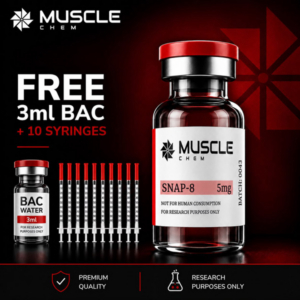
MuscleChem, provides SNAP-8 – 5mg as a research-grade Peptides. It should be used only for legitimate research purposes and not for human consumption or self-administration.
Research Disclaimer: This article is provided for informational and educational purposes only. SNAP-8 is a research-grade peptide and is not presented as a drug, medicine, or treatment for any disease or medical condition. Research findings discussed in this article should not be interpreted as proof of human therapeutic efficacy or safety. Human safety data remain limited, particularly for uses outside the topical cosmetic research context. Always consult an appropriately qualified healthcare professional for medical questions and follow applicable laboratory, institutional, and regulatory requirements when conducting research.