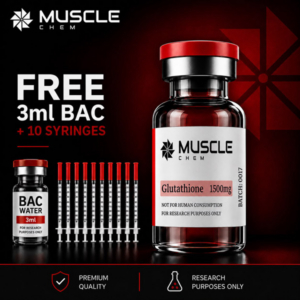
SARMs and Peptides: Marketing vs Reality — What UK Buyers Should Know
Walk through any fitness forum, Instagram comment section, or gym changing room in the UK, and you’ll eventually hear someone mention SARMs or Peptides. They’re marketed as the “next generation” of muscle building, fat loss, and recovery tools — often positioned as safer, more targeted alternatives to anabolic steroids. Product pages promise lean muscle gains, faster healing, and dramatic body composition changes, frequently accompanied by glossy before-and-after photos and testimonials.
The reality is more complicated, and considerably less glamorous. This article looks honestly at the gap between how SARMs and Peptides are marketed in the UK and what the current science, law, and manufacturing landscape actually say. Our aim is not to tell you what to do with your body — that’s your decision — but to make sure you’re making it with accurate information rather than marketing copy.
What Are SARMs and Peptides, Actually?
SARMs are synthetic compounds designed to bind to androgen receptors in muscle and bone tissue with, in theory, less activity in other tissues (like the prostate or scalp) compared to testosterone or anabolic steroids. Common names circulating in the UK market include MK-2866 (Ostarine), LGD-4033 (Ligandrol), RAD-140, and YK-11.
Peptides are short chains of amino acids that can act as signaling molecules in the body. In the fitness and anti-ageing space, peptides such as BPC-157, TB-500 Blend, GHRP-6, Ipamorelin, and various Melanotan (MT2) variants are widely discussed for supposed effects ranging from tissue repair to growth hormone release to tanning. Both categories are frequently sold in the UK under one crucial label: “research chemicals” or “not for human consumption.” That label is not a marketing quirk — it is a legal necessity, and understanding why matters enormously for buyers.
The Marketing Reality
Search for SARMs or peptides online and you’ll typically encounter:
- Bodybuilding-style branding — product names, packaging, and imagery that closely mirror supplement or pharmaceutical products, complete with dosage-style language on some sites despite the “research only” disclaimer buried in the small print.
- Influencer and forum endorsement — informal, enthusiastic accounts of personal use, often without any disclosure of sponsorship, batch testing, or adverse effects experienced by others.
- Comparisons to anabolic steroids — SARMs in particular are frequently marketed as offering “steroid-like results without the side effects,” a claim that is not supported by robust human clinical evidence.
- Purity and lab-testing claims — many sellers cite third-party testing or Certificates of Analysis (COAs) to build trust, though the rigour, independence, and recency of that testing varies enormously between suppliers.
- Ambiguous legal framing — sites often state a product is “legal in the UK” without clarifying that legality to possess or sell as a research chemical is entirely different from legality or safety to consume.
None of this is unique to any one retailer — it reflects an industry-wide pattern that has developed partly in response to how these substances are regulated (or not regulated) in the UK.
The Legal Reality in the UK
This is the part most marketing conveniently skips, so it’s worth being precise.
SARMs are not licensed medicines in the UK. They have not gone through the Medicines and Healthcare products Regulatory Agency’s (MHRA) approval process for human use, which means no SARM currently sold in the UK fitness market has been assessed for safety, efficacy, or quality to the standard required of an actual medicine.
They are also not controlled drugs under the Misuse of Drugs Act 1971, which is why they can be legally sold and possessed in the UK — but only when marketed and sold strictly as research chemicals, not for human consumption. This is a meaningful legal distinction: a company selling a compound “for laboratory research purposes only” is operating in a different regulatory category than one implicitly or explicitly selling it as something to be taken by a person for muscle growth.
Peptides occupy a similarly grey space. Many of the peptides sold in the online fitness market are not licensed medicines in the UK, and their sale for human use without a prescription and MHRA authorization would fall foul of the Human Medicines Regulations 2012. Legitimate, licensed peptide therapies do exist in clinical medicine (for example, certain GLP-1 receptor agonists or hormone therapies) — but those are entirely separate, tightly regulated products, prescribed by clinicians, and should not be confused with unregulated research-chemical peptides sold online.
The Advertising Standards Authority (ASA) has also taken action against UK companies making unauthorized health or performance claims about SARMs and similar products, since making such claims for an unlicensed substance breaches UK advertising codes regardless of the “research only” label attached to the product itself.
The practical upshot: the “not for human consumption” disclaimer you see on virtually every SARM and peptide product in the UK exists because it reflects the actual legal boundary these companies must operate within — not because of overcautious lawyers covering trivial risk.
The Manufacturing and Quality Reality
Because these products are not regulated as medicines or food supplements, there is no mandatory UK or EU oversight of:
- Manufacturing standards — no requirement for Good Manufacturing Practice (GMP) certification equivalent to pharmaceuticals.
- Batch consistency — purity and dosage can vary significantly between batches and between suppliers, even for products claiming identical specifications.
- Contamination testing — independent analyses of SARMs products sold internationally have repeatedly found discrepancies between labelled and actual contents, including underdosing, overdosing, and the presence of unlisted substances.
- Third-party verification — a COA is only as trustworthy as the lab that issued it and how recently it was run against the specific batch in question. Not all COAs represent independent, accredited testing.
This is arguably the single most important “marketing vs reality” gap: marketing language emphasises purity, quality, and lab verification, while the underlying regulatory infrastructure to guarantee any of that consistently, batch after batch, simply does not exist in the way it does for licensed medicines.
The Health Evidence Reality
Clinical research into SARMs has generally been limited to small trials for specific medical applications (such as muscle wasting in cancer or chronic illness), not for the bodybuilding and aesthetic uses they’re marketed for online. Where longer-term human safety data exists, findings have raised concerns including effects on liver enzymes, lipid profiles, and hormonal suppression. Regulatory bodies including the MHRA and the World Anti-Doping Agency (WADA), which prohibits SARMs in competitive sport, have flagged these substances as carrying meaningful health uncertainty.
Peptides marketed for fitness or anti-ageing use are, in most cases, even less studied in humans at the doses and routes of administration commonly discussed online. Much of the enthusiastic reporting around compounds like BPC-157 or TB-500 stems from animal studies or anecdotal use rather than controlled human trials.
None of this means every product is dangerous or that no one has used these compounds without incident. It means the confident, benefits-focused tone common in marketing materials is not backed by the same weight of evidence you’d expect from a licensed pharmaceutical or supplement making equivalent claims.
Red Flags to Watch For
When evaluating any UK supplier of SARMs or Peptides, it’s worth being skeptical of:
- Sites that market products with explicit dosing instructions “just in case” while nominally labelling them research-only — this internal contradiction usually signals the “research chemical” label is a legal fig leaf rather than a genuine research focus.
- Testimonials or influencer content presented without any acknowledgement of individual variability, side effects, or the unregulated nature of the product.
- Absence of any batch-specific, dated Certificate of Analysis from an accredited, independent laboratory.
- Pressure-selling tactics, exaggerated “steroid alternative” claims, or comparisons implying regulatory approval that doesn’t exist.
- No clear UK business registration, contact details, or return/complaints process.
What Responsible Buying Looks Like
If you choose to purchase SARMs or Peptides in the UK as research chemicals, a more informed approach includes:
- Understanding the actual legal status of the specific product — that it is not an approved medicine and is sold strictly for research purposes.
- Requesting and reviewing batch-specific, independently issued COAs, and understanding what they do and don’t verify.
- Being skeptical of health, performance, or safety claims that go beyond what independent, peer-reviewed human research currently supports.
- Speaking with a GP or qualified healthcare professional, particularly if you have existing health conditions, take other medications, or are considering use alongside training and diet changes — a professional can help you understand risk in the context of your own health history.
- Keeping records of what you buy, from where, and any batch information, in case of adverse effects or the need to report a product.
Conclusion
The SARMs and Peptides market in the UK sits in a genuine grey zone — legal to sell and possess as research chemicals, but not licensed, approved, or verified for human use in the way medicines and regulated supplements are. Marketing in this space, across the industry, tends to emphasize potential benefits while underplaying the legal caveats, quality-control gaps, and thin human safety evidence that actually define the category.
Being an informed buyer means separating the two: understanding what these products legally are, what the evidence does and doesn’t show, and what quality assurance genuinely means versus what it claims to mean. MuscleChem believes UK consumers are better served by that clarity than by hype — whatever choice you ultimately make.
Disclaimer: This article is for general information purposes only and does not constitute medical or legal advice. SARMs and Peptides discussed here are sold and intended strictly as research chemicals, not for human consumption. Always consult a qualified healthcare professional before making decisions that affect your health.